Learn
Crypto,
term by term.
Every word that trips people up, in plain English. No jargon explaining jargon, just clear definitions you can actually use.
40 terms

#
-
2FA (Two-Factor Authentication)
SecurityA second check on top of your password, usually a code from an app on your phone. Even if someone steals your password, they still can’t get in without it.
A
-
Altcoin
BasicsAny cryptocurrency that isn’t Bitcoin. The word is short for "alternative coin" and covers thousands of projects, from Ethereum to tiny new tokens.
-
AML (Anti-Money Laundering)
RegulationThe rules that stop criminals from hiding illegal money through crypto. They’re the reason regulated platforms ask who you are and where your funds come from.
-
ATH (All-Time High)
MarketsThe highest price a coin has ever reached. It’s a useful reference point, but it’s no promise the price will ever return there.
B
-
Bear market
MarketsA long stretch where prices are falling and most people feel gloomy. The opposite of a bull market.
-
Bitcoin
BasicsThe first and best-known cryptocurrency, launched in 2009. It’s digital money that runs on a worldwide network with no bank or government in charge.
-
Blockchain
BasicsThe shared digital record that crypto runs on. Think of it as a public notebook, copied across thousands of computers, where every transaction is written down and can’t be quietly changed.
-
Bull market
MarketsA long stretch where prices are rising and people feel optimistic. The opposite of a bear market.
C
-
Coin
BasicsA cryptocurrency that has its own blockchain, like Bitcoin or Ethereum. It’s the native money of that network (unlike a token, which is built on top of one).
-
Cold storage
SecurityKeeping crypto completely offline, so hackers on the internet can’t reach it. People use it for coins they don’t plan to touch for a while.
-
Custody / Custodian
SecurityWho actually safeguards your crypto. A custodian is a regulated company that holds the keys for you, so you don’t have to worry about losing them yourself.
D
-
DCA (Dollar-Cost Averaging)
StrategyBuying a small, fixed amount on a regular schedule — say a little every week — instead of trying to guess the perfect moment. It smooths out the ups and downs over time.
-
Decentralization
BasicsWhen no single company or person is in control — the system is run by many computers around the world. It makes a network harder to shut down or censor.
E
-
Ethereum
BasicsThe second-biggest cryptocurrency, and a platform that lets developers build apps and tokens on top of it. Its coin is called Ether (ETH).
-
Exchange
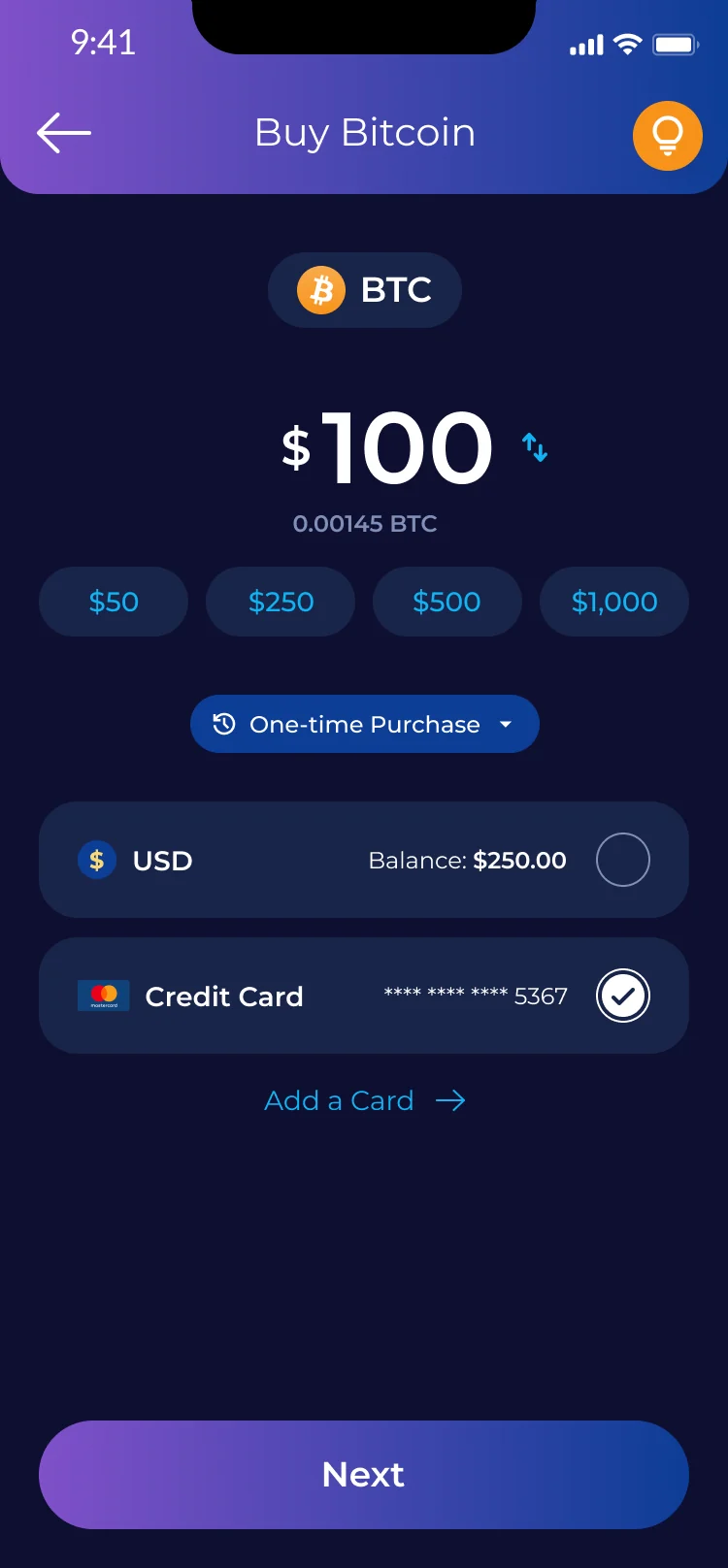
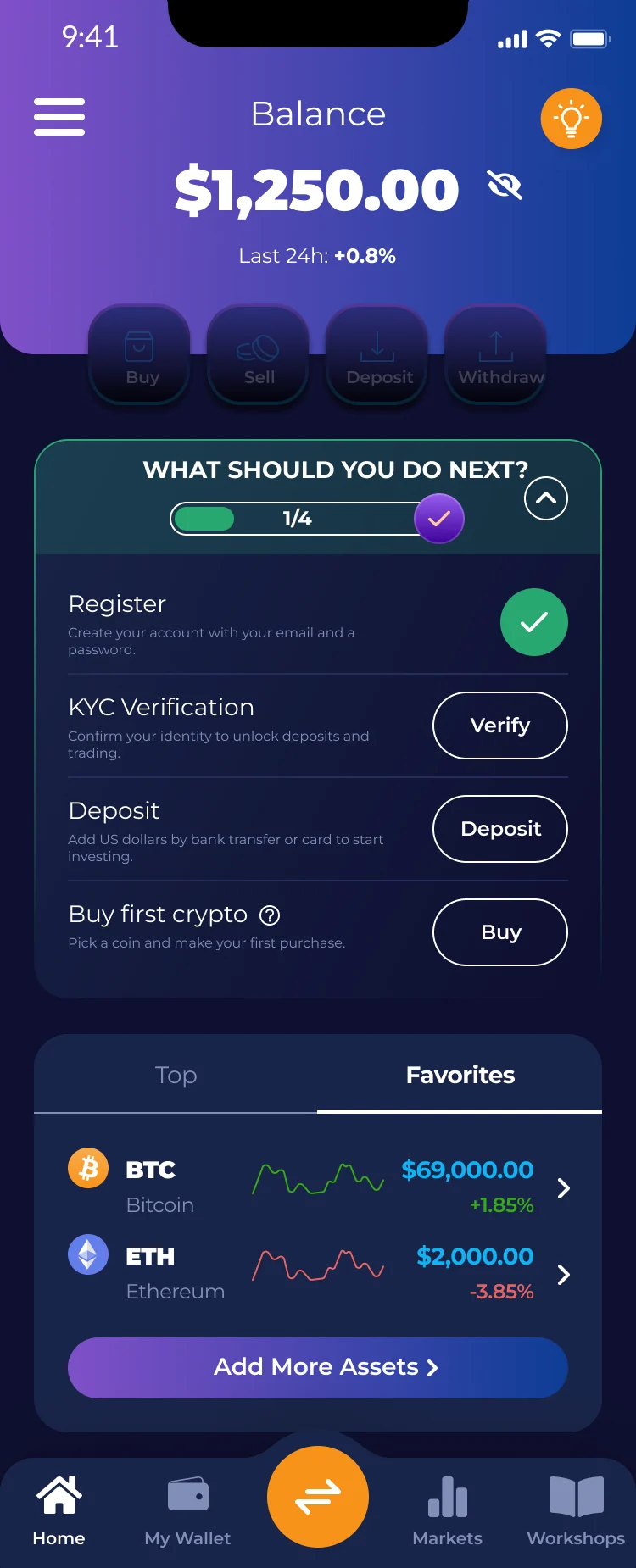
BasicsA platform where you buy, sell, and trade crypto — a bit like an online currency bureau. Rumos lets you do this straight from the app.
F
-
Fiat
BasicsOrdinary government money like euros, dollars, or pounds. "Fiat" is just the word crypto people use to tell it apart from cryptocurrency.
G
-
Gas fee
MarketsThe small charge you pay to make a transaction go through on a blockchain. It rises when the network is busy and falls when it’s quiet.
H
-
Halving
BasicsA scheduled event where the reward for mining new Bitcoin is cut in half, roughly every four years. It slows down how fast new coins are created.
-
HODL
StrategyCrypto slang for holding onto your coins through the ups and downs instead of selling in a panic. It started as a typo of "hold" and stuck.
-
Hot wallet
SecurityA wallet that stays connected to the internet, so it’s handy for everyday buying and spending — but a little more exposed than cold storage.
K
-
KYC (Know Your Customer)
RegulationThe quick identity check you do when signing up — usually a photo of your ID and your face. It’s a legal requirement that keeps regulated platforms safe and above board.
L
-
Ledger
BasicsA record of who owns what. On a blockchain the ledger is public and shared, so everyone can agree on the balances without trusting a middleman. (Ledger is also a popular brand of hardware wallet.)
-
Liquidity
MarketsHow easily you can buy or sell something without moving its price. High liquidity means there are plenty of buyers and sellers, so your order fills quickly and fairly.
M
-
Market cap
MarketsThe total value of all of a coin’s units added together — its price multiplied by how many exist. A bigger market cap usually means a more established coin.
-
Mining
BasicsThe process some networks use to confirm transactions and create new coins, done by computers solving hard puzzles. Bitcoin works this way.
N
-
NFT (Non-Fungible Token)
BasicsA one-of-a-kind digital item recorded on a blockchain, like a piece of art or a collectible. Unlike a coin, each NFT is unique and can’t be swapped one-for-one.
P
-
Private key
SecurityThe secret code that proves you own your crypto and lets you move it. Anyone who has it controls your funds, so it must never be shared.
-
Public address
SecurityYour wallet’s shareable "account number" — the string of characters people send crypto to. It’s safe to give out, unlike your private key.
S
-
Seed phrase
SecurityA list of 12 to 24 simple words that can restore your entire wallet if your device is lost. Write it down, keep it offline, and never type it into a website.
-
SEPA
PaymentsThe standard way to move euros between bank accounts across Europe. On Rumos it’s how you deposit and withdraw cash, usually within a day.
-
Smart contract
BasicsA small program that lives on a blockchain and runs automatically when its conditions are met — like a vending machine for digital agreements, with no middleman needed.
-
Spread
MarketsThe small gap between the price to buy and the price to sell at any moment. A tighter spread means you’re getting a fairer deal.
-
Stablecoin
BasicsA cryptocurrency designed to hold a steady value, usually pegged to a currency like the dollar or euro. People use it to park funds without the wild price swings.
-
Staking
StrategyLocking up some of your crypto to help run a network, and earning rewards for doing so — a bit like interest on a savings account. It only works on certain coins.
Rumos doesn't offer staking.
T
-
Token
BasicsA cryptocurrency built on top of an existing blockchain rather than having its own. Many tokens live on Ethereum, for example.
V
-
Volatility
MarketsHow much and how fast a price swings up and down. High volatility means bigger possible gains — and bigger possible losses.
-
Volume
MarketsHow much of a coin has been bought and sold over a period, usually the last 24 hours. High volume signals lots of activity and interest.
W
-
Wallet
BasicsWhere your crypto lives. Rather than holding coins like a purse holds cash, a wallet stores the keys that let you access and move your funds.
-
Whale
MarketsSomeone who holds a very large amount of a coin — enough that their buying or selling can nudge the whole market.
Y
-
Yield
StrategyThe return you earn on crypto you put to work, for example through staking. It’s usually shown as a yearly percentage, like interest.
Rumos doesn't offer yield.
No terms match that search.
Try a shorter word, or ask us to add it.
Get started
Ready to go deeper?
Turn these words into confidence. Take a free workshop, or start in the app with 0% trading fees for 30 days.
Crypto prices can go down as well as up. Only use money you can afford to lose.