The Red-Flag Test
Why smart people get scammed
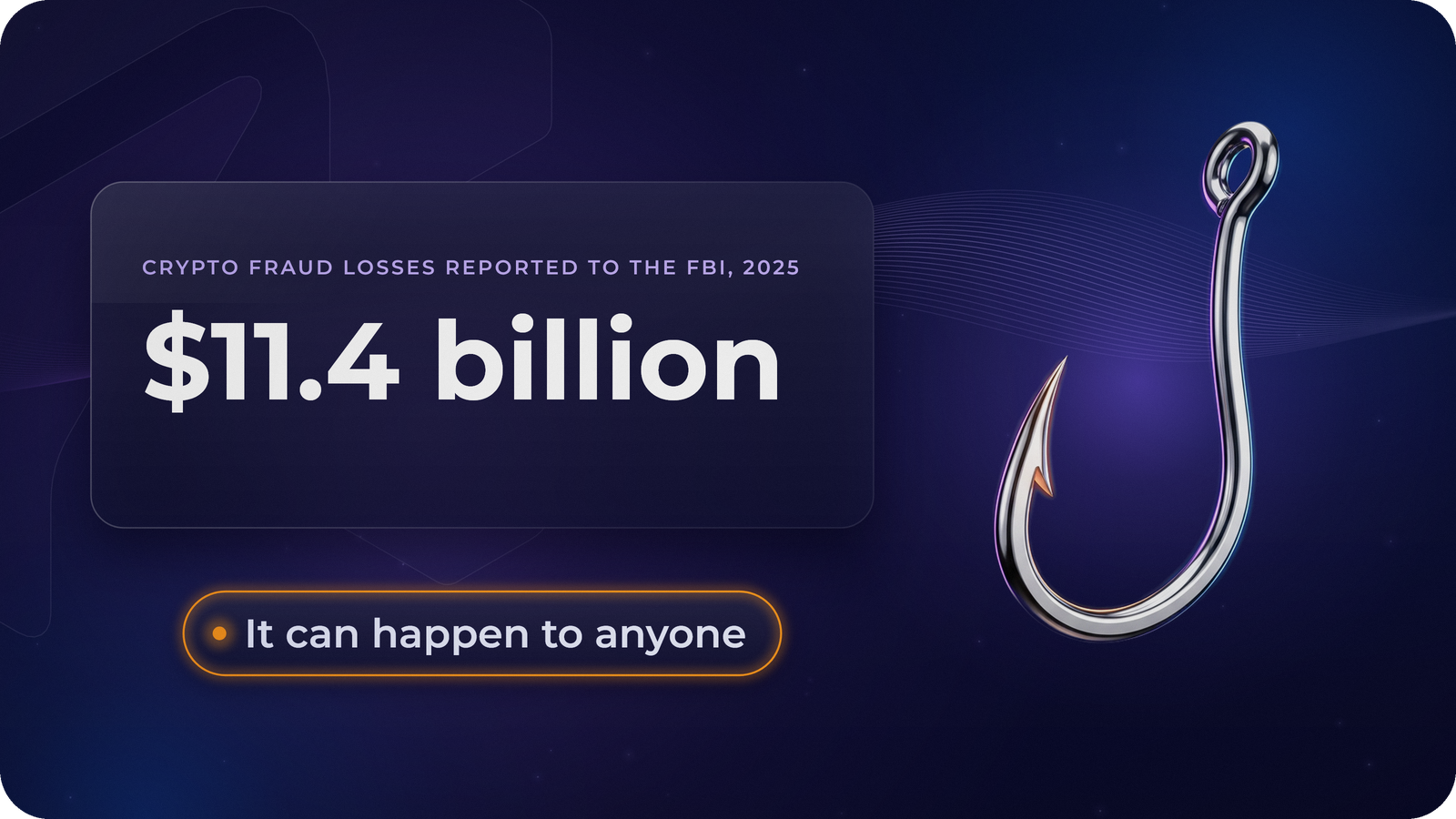
In 2025, $11.4 billion in crypto-related fraud losses was reported to the FBI's Internet Crime Complaint Center (IC3), more than in any year before. Many of the victims were careful, educated people.
Scams don't work because victims are foolish. They work because they press emotional buttons: hope (“double your money”), fear (“your account is under attack”), trust (“I'm from your bank”) and hurry (“only 15 minutes left”). Under pressure, anyone can make a quick decision they regret.
The good news: scams keep reusing the same tricks. Once you know the tricks, you'll spot them even in a scam you've never seen before. That's what this course trains.
Red flags 1–3: the pressure
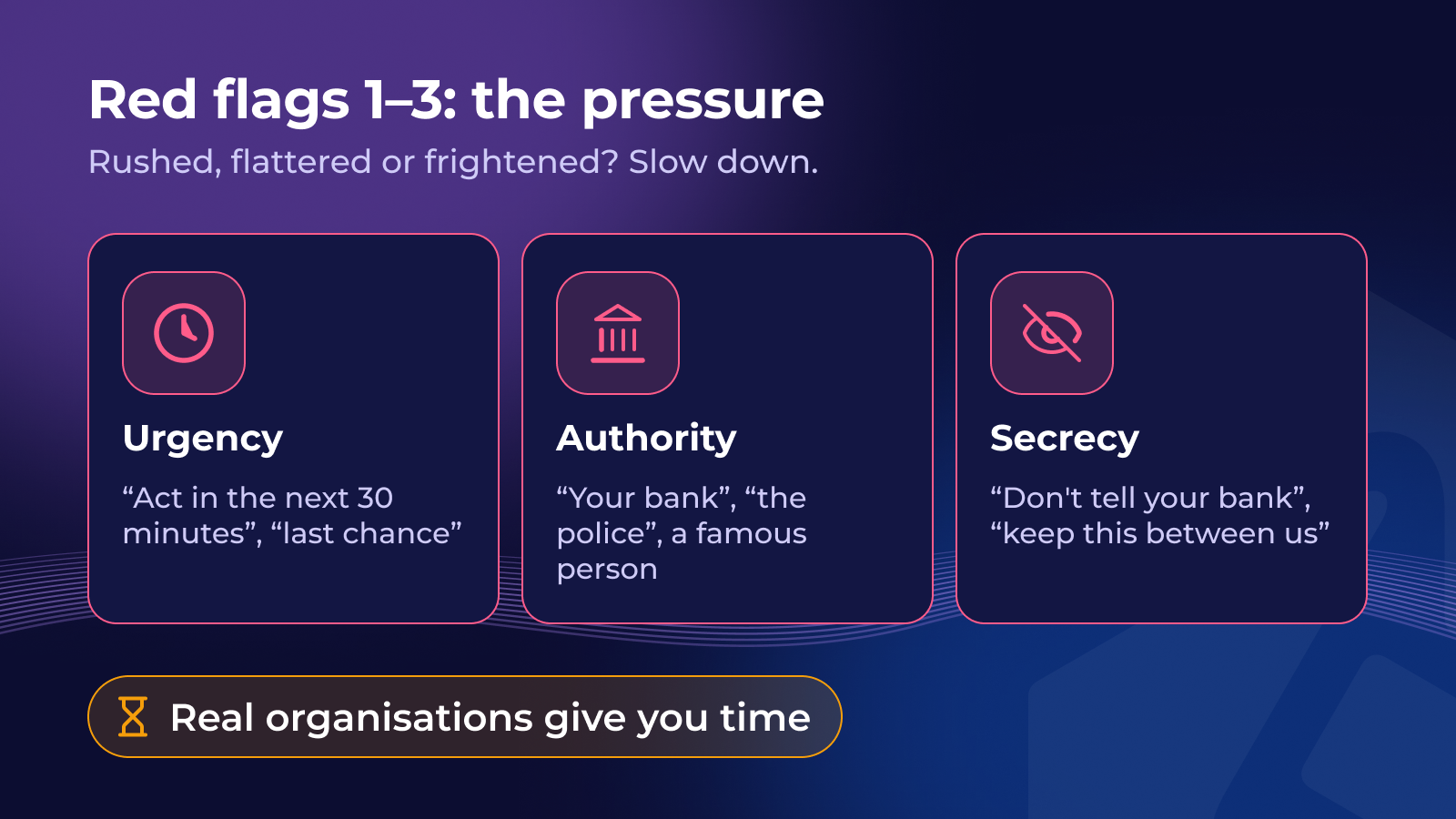
The first three red flags put you under pressure so you don't stop to think:
- Urgency. “Act in the next 30 minutes”, “last chance”, “your account will be closed”. Real organisations give you time.
- Authority. The message claims to come from your bank, your crypto app, the police, a tax office or a famous person. A logo or an official tone proves nothing.
- Secrecy. “Don't tell your bank, they'll block it”, “keep this between us”. Scammers isolate you because a friend or a bank employee would spot the scam.
When you feel rushed, flattered or frightened, that feeling itself is a signal to slow down.
Practice: read this message
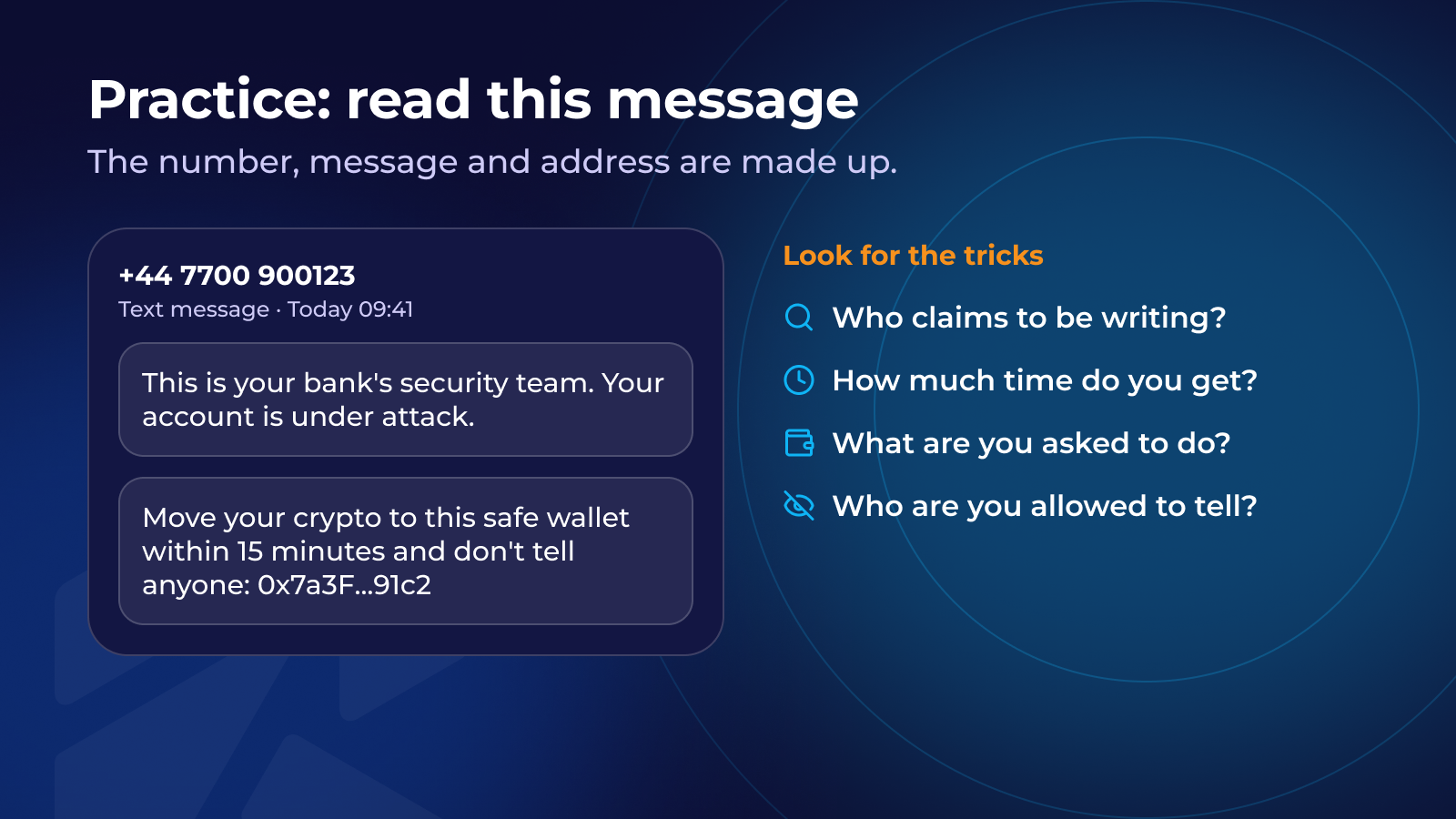
Time to practise. The picture shows a text message of a kind many people receive. Read it slowly, as if it had just arrived on your phone.
Before you answer the next question, look for the tricks from the previous step: who claims to be writing, how much time you're given, what you're asked to do and who you're allowed to tell.
The number, the message and the wallet address are made up for this lesson.
Quick check
A message says: “This is your bank's security team. Your account is under attack. Move your crypto to this safe wallet within 15 minutes and don't tell anyone.” Which red flags do you see? Select all that apply.
Select all that apply
Red flags 4–6: the money ask
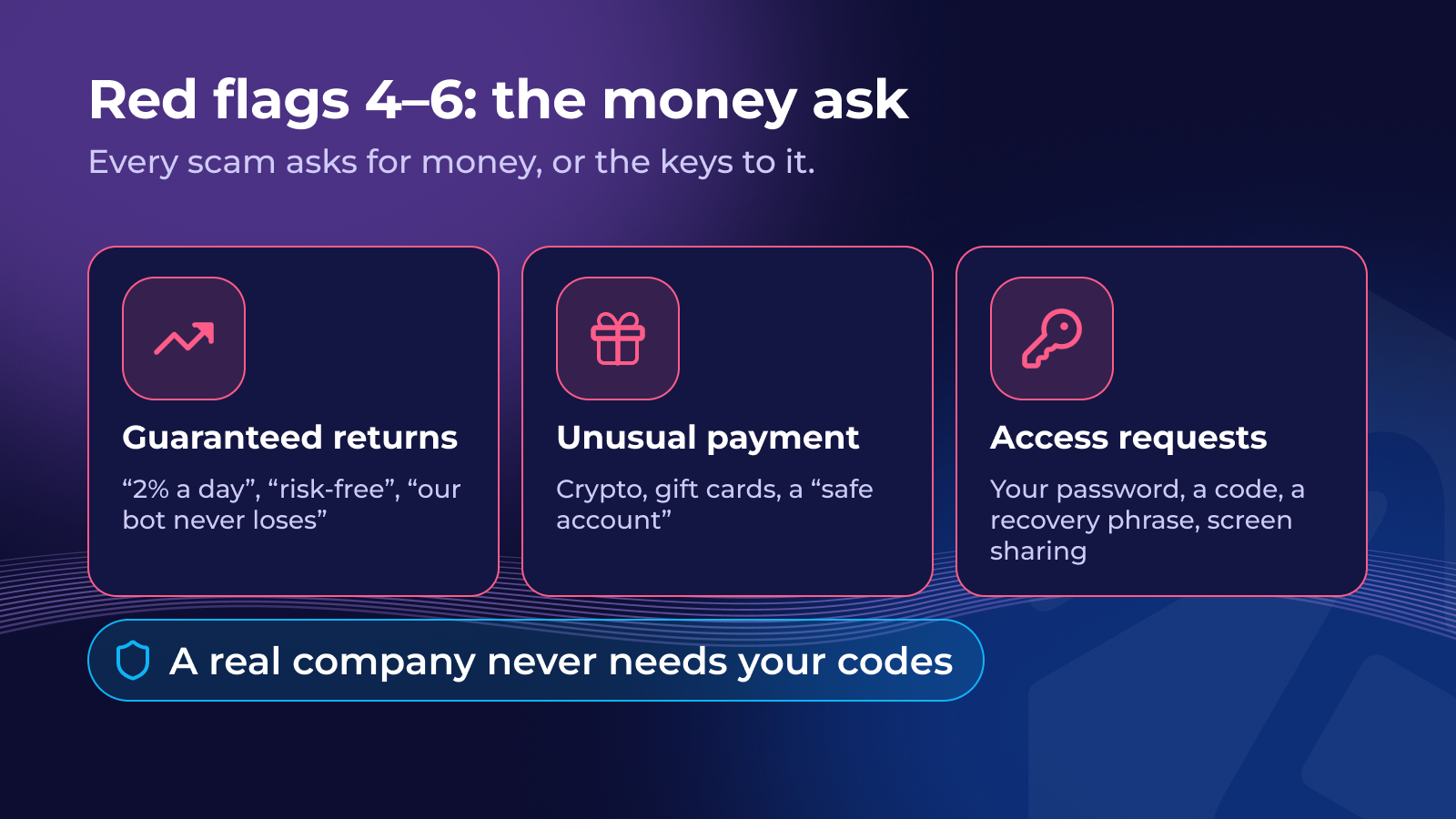
Sooner or later every scam asks for money or for the keys to your money:
- Guaranteed returns. “2% a day”, “risk-free”, “our bot never loses”. Real investments can lose value; nobody can guarantee high returns.
- Unusual payment. Crypto, gift cards, or moving your money to a “safe account” or “safe wallet”. These are hard or impossible to reverse.
- Access requests. Your password, a one-time code, a recovery phrase, or installing a screen-sharing app. With these, someone can empty your account without you sending anything.
A legitimate company will never need your codes or your recovery phrase to help you.
Quick check
Red flags: which of these is normal, expected behaviour rather than a warning sign?
The one-minute rule
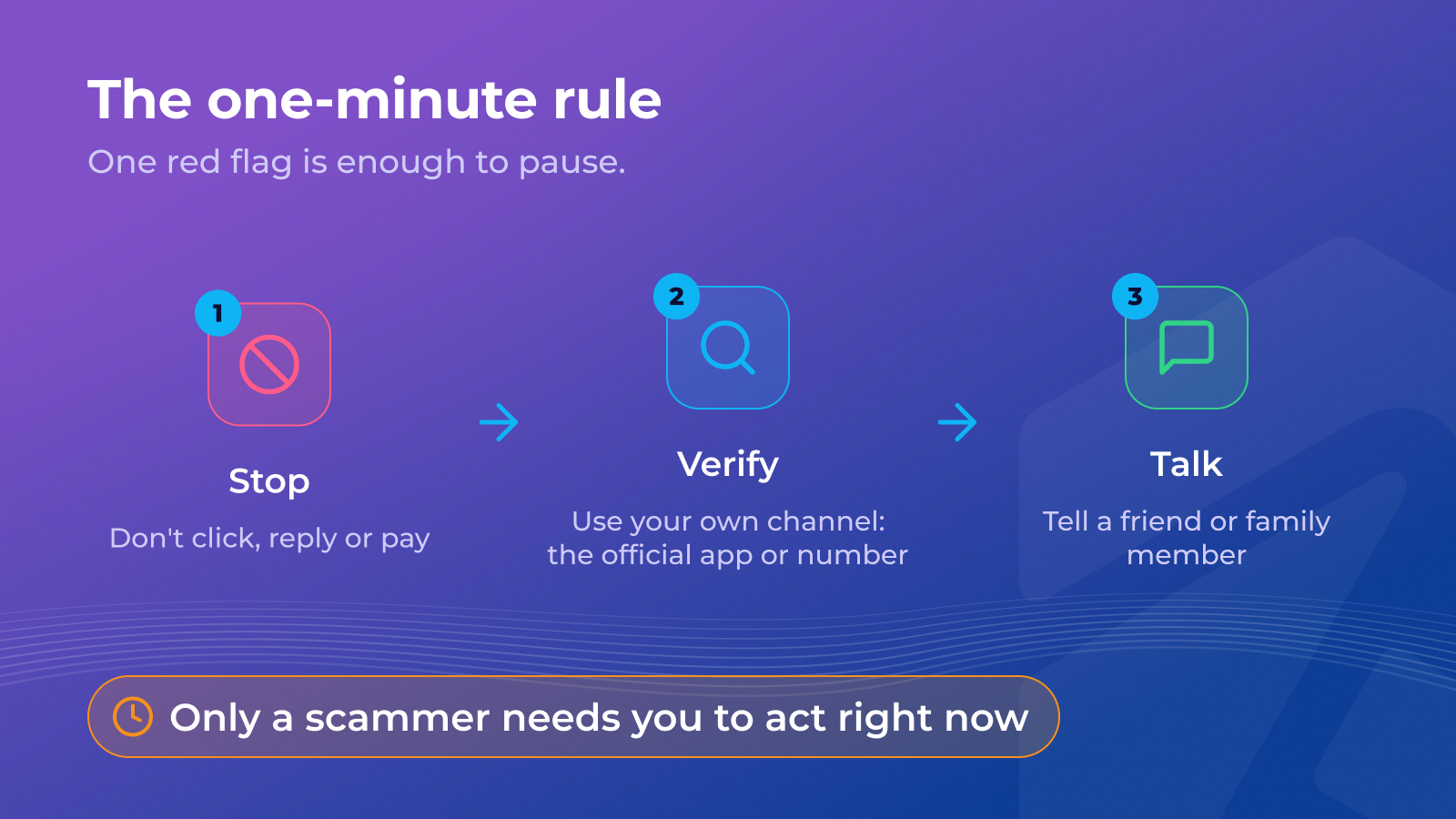
When you see even one red flag, give yourself a minute:
- Stop. Don't click, don't reply, don't pay. Hang up if it's a call.
- Verify through your own channel. Open the official app yourself, or call the number on your bank card or the company's official website. Never use the link or number in the message.
- Talk to someone. Tell a friend or family member what's happening. Saying it out loud often breaks the spell.
A real bank, app or authority can wait a few minutes. Only a scammer needs you to act right now.
Quick check
Nora gets a call from a “tax officer”: she owes tax on her crypto and must pay today, in Bitcoin, or be arrested. Which tactics are in play?
Recap: one red flag is enough
- Scams use the same six tricks: urgency, authority, secrecy, guaranteed returns, unusual payment and access requests.
- One red flag is enough to stop and verify through a channel you find yourself.
- No real organisation needs your passwords, codes or recovery phrase.
See it in the app: take a minute to review your security settings.
Next: phishing, fake support and fake apps.
Lesson complete!
0 / 3
That's the first chapter. Continue this course — and unlock the rest — in the Rumos app.