What Is KYC and Why Do We Ask?
Why every regulated app asks who you are
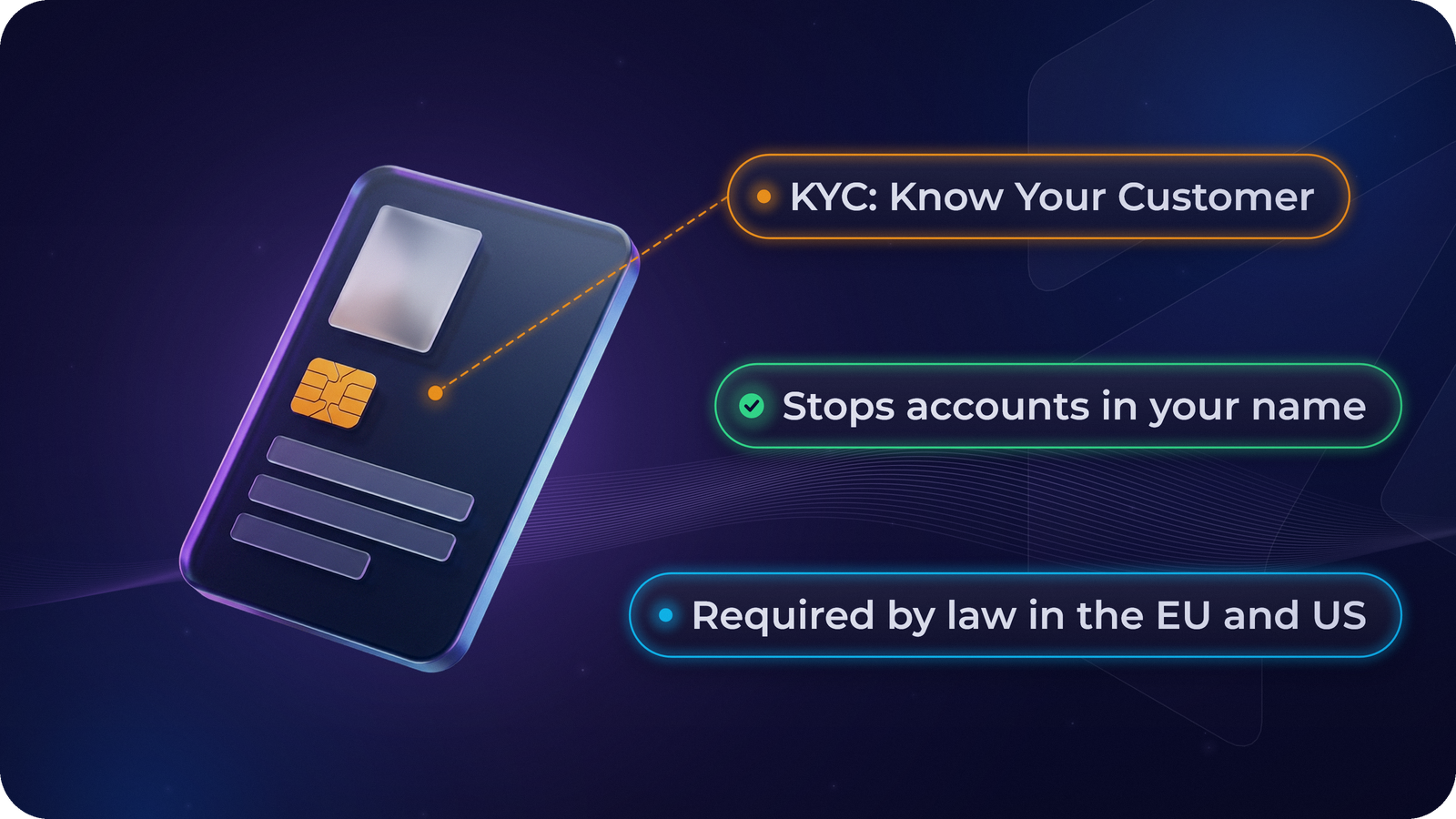
Have you noticed that banks, payment apps and crypto apps all ask for your ID? That’s no coincidence. Laws in the EU and the US require regulated financial companies to know who their customers are before they open an account. This is called KYC: Know Your Customer.
The aim is to stop criminals from using financial services to hide stolen money, fund terrorism or commit fraud in someone else’s name.
For you, it also means that nobody can easily open an account in your name with a made-up or stolen identity.
KYC is part of a wider set of rules called AML, anti-money laundering.
Quick check
Why do crypto apps have to run KYC checks?
What KYC involves
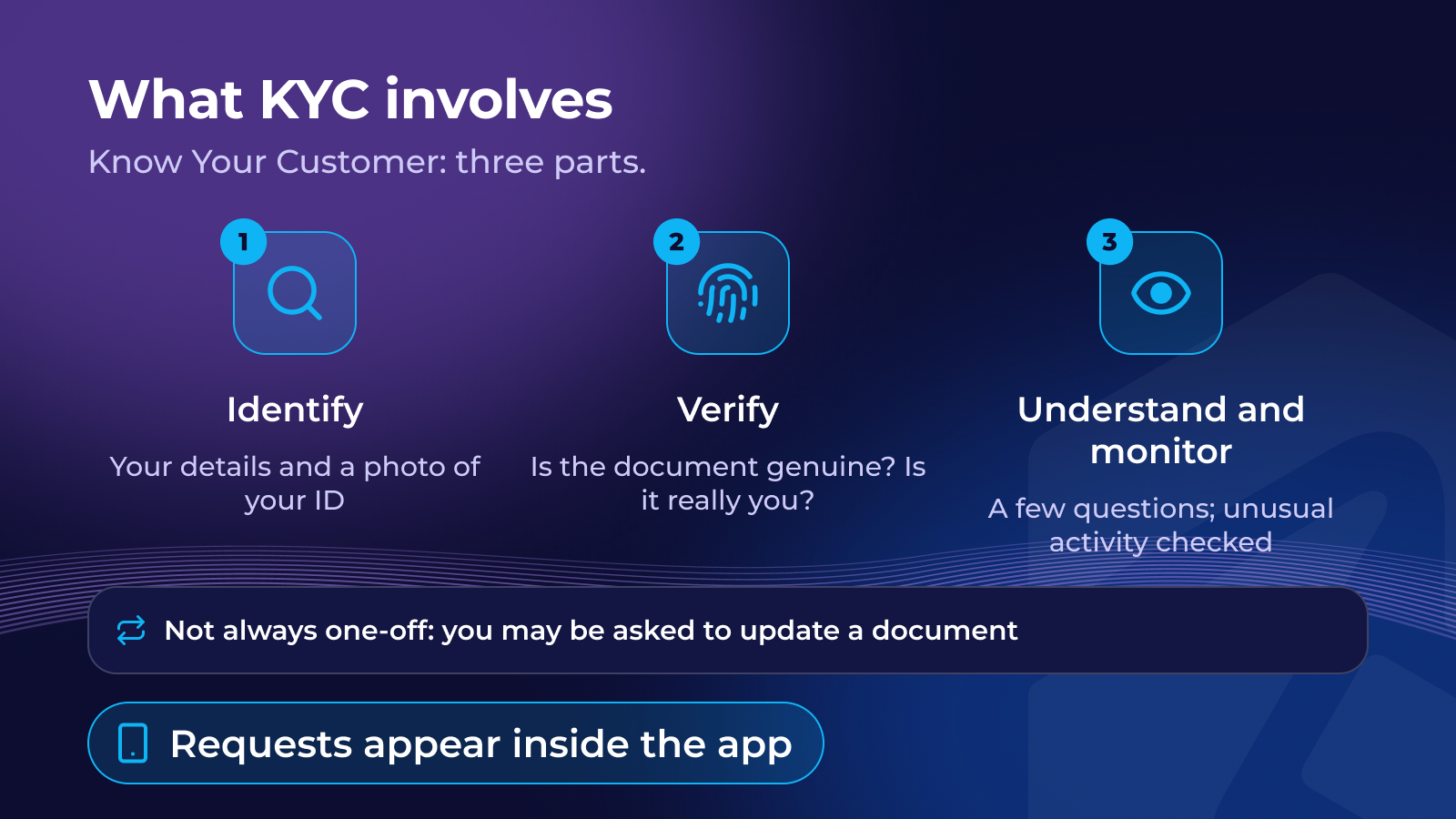
KYC usually has three parts:
- Identify: you give your personal details and a photo of your ID or passport.
- Verify: the company checks that the document is genuine and that it’s really you, for example with a selfie.
- Understand and monitor: you answer a few questions, such as where your money comes from or whether you hold an important public office. Later, unusual activity may be checked.
KYC isn’t always one-off. You may be asked to update a document or answer new questions, for example when your ID expires or the rules change. In Rumos, these requests appear inside the app.
Quick check
An email with a link asks you to “complete KYC” for your crypto account by uploading photos of your ID on a website. What do you do?
The Travel Rule
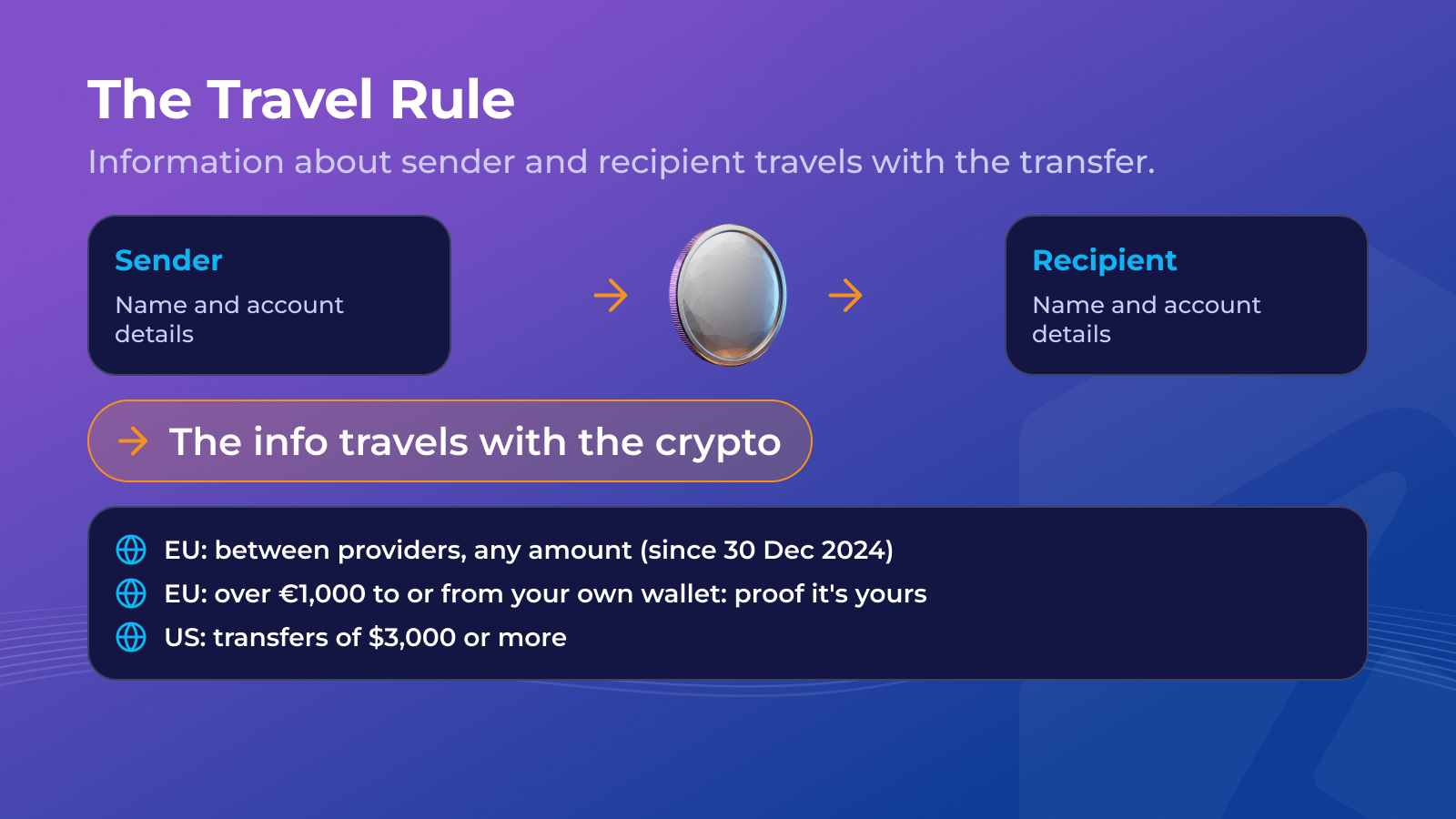
Crypto transfers have rules of their own. Under the so-called Travel Rule, when a regulated provider sends crypto for a customer, information about the sender and the recipient has to travel with the transfer, much as it does with a bank transfer.
- EU: since 30 December 2024, this applies to crypto transfers between providers of any amount (the Transfer of Funds Regulation). For transfers of more than €1,000 to or from your own wallet, the provider must check that the wallet is yours.
- US: a similar rule applies to transfers of $3,000 or more.
That’s why a regulated app may ask who you’re sending crypto to, or where incoming crypto comes from. It isn’t nosiness: the law requires the provider to ask.
Quick check
Sara’s crypto app asks her, inside the app, to upload a new ID because her old one has expired. What’s the best explanation?
Recap
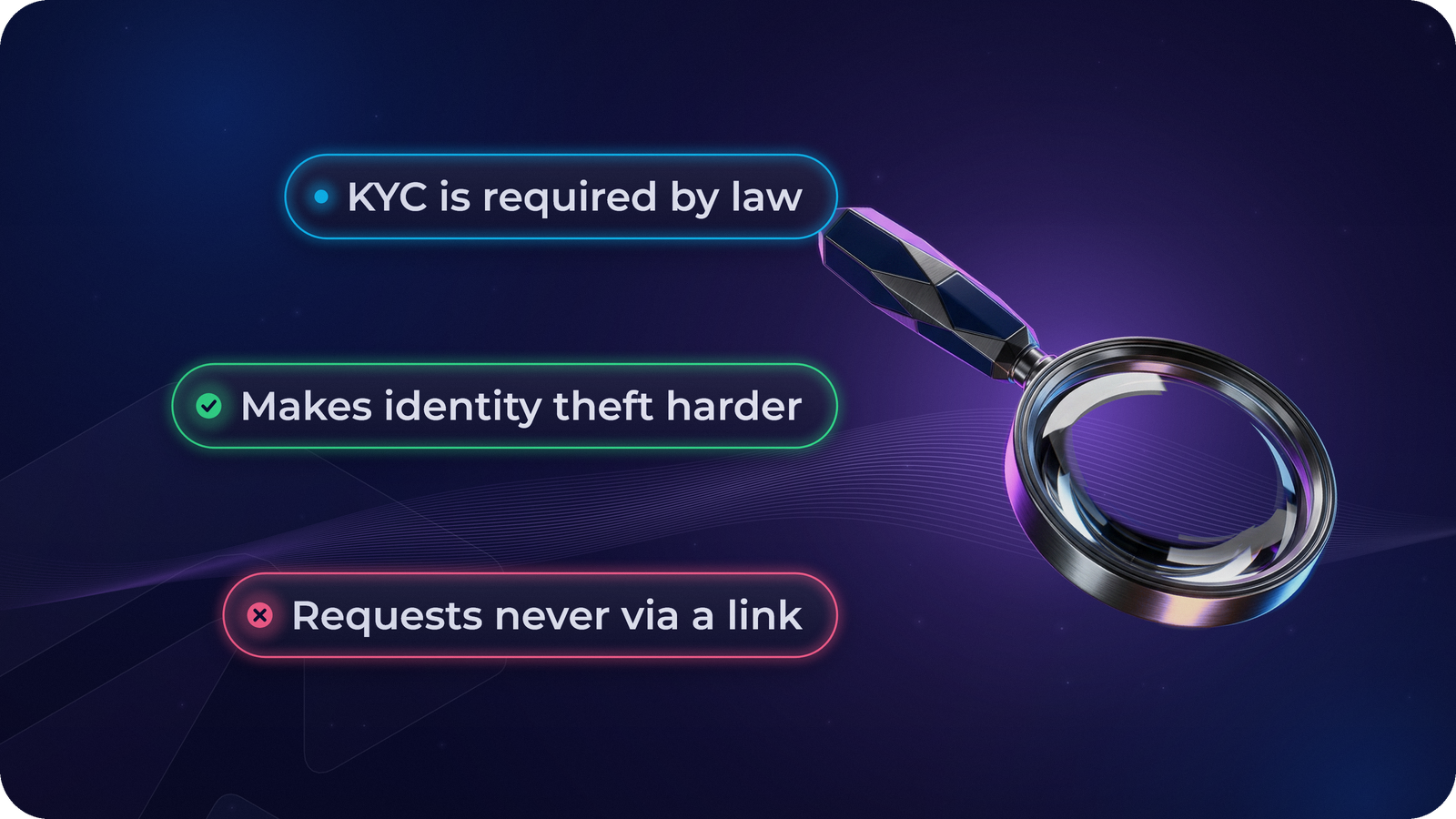
- KYC (Know Your Customer) means checking who customers are. It’s required by law in the EU and the US.
- It protects the financial system and makes it harder for anyone to open an account in your name.
- KYC can need updating later. Genuine requests appear inside the app, never as a link in an unexpected message.
- The Travel Rule makes information about sender and recipient travel with crypto transfers.
Next: what personal data is collected during verification, why, and what your rights are. Why We Need Your Data, and Your Rights
Lesson complete!
0 / 3
That's the first chapter. Continue this course — and unlock the rest — in the Rumos app.