Market Basics: How Crypto Prices Are Set
Who sets the price?
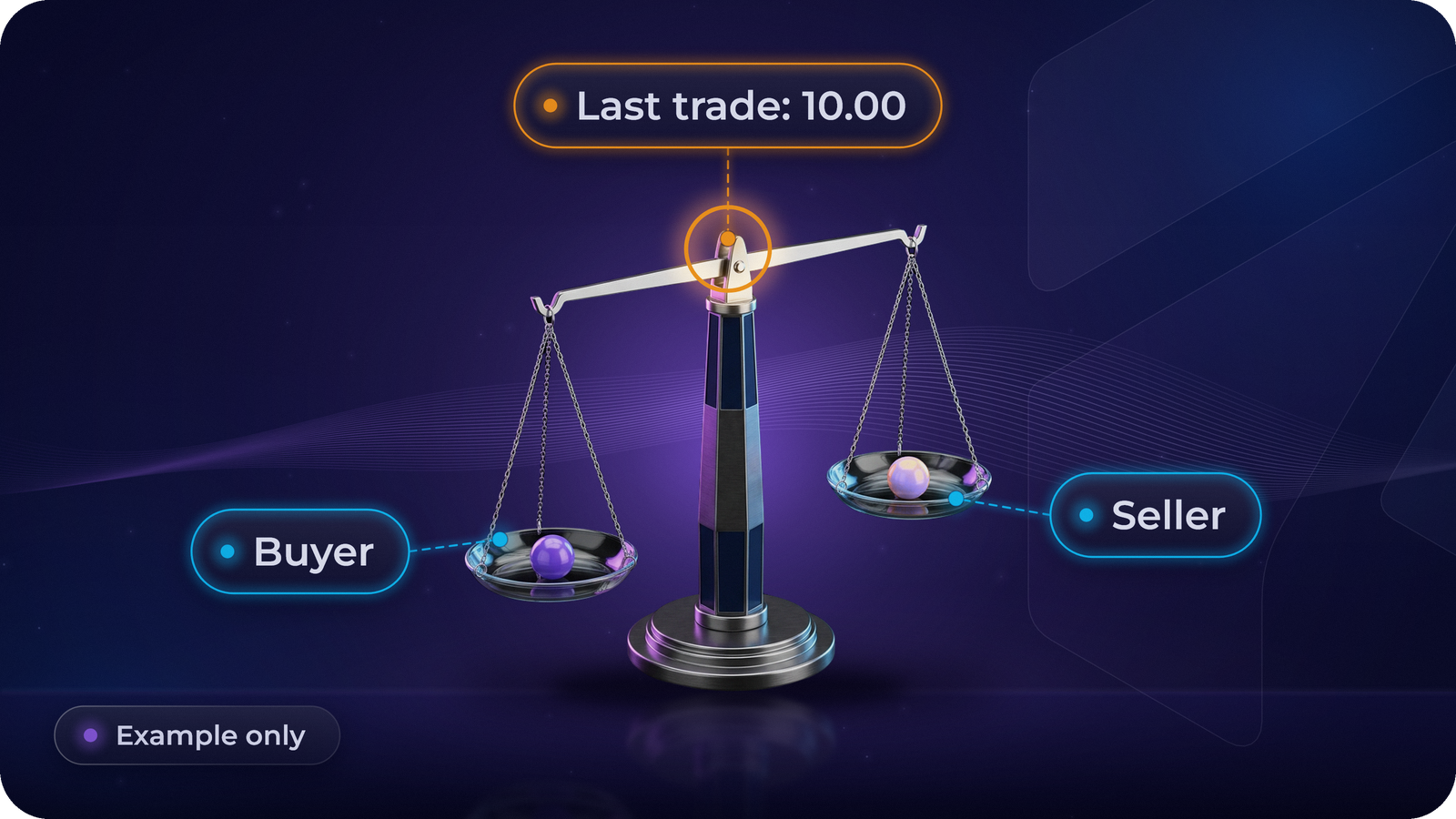
Who decides that a coin costs $10 (or €10) right now? Nobody, and everybody.
A crypto price is simply where the last buyer and seller agreed. On an exchange, people post the prices at which they are willing to buy or sell. When a buyer and a seller meet, a trade happens, and that trade becomes the latest price you see.
Different platforms have their own buyers and sellers, so the price of the same coin can differ slightly from one to another.
Bid, ask and spread
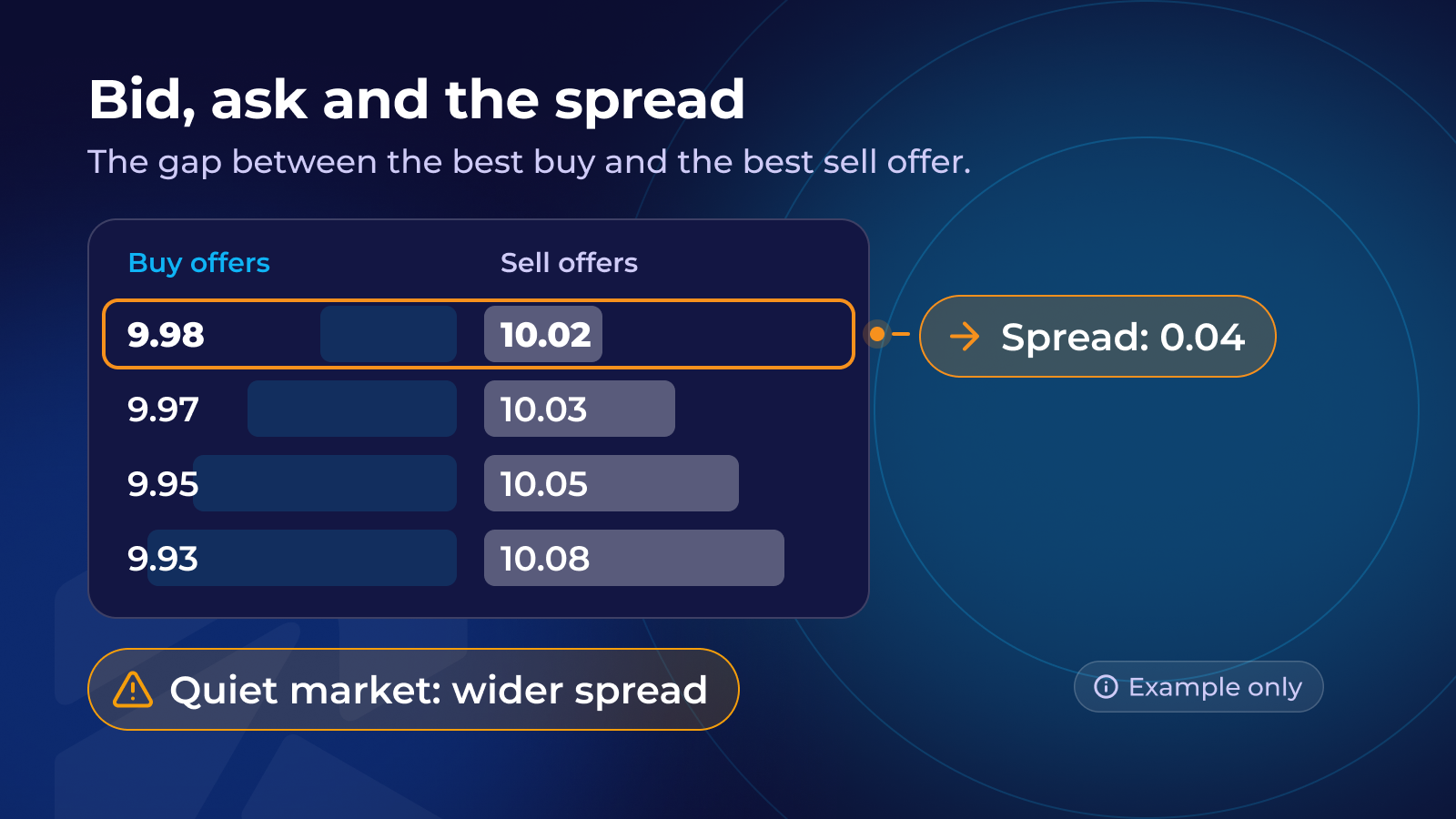
Buyers post what they are willing to pay: bids. Sellers post what they want to receive: asks. Together these offers form the order book.
The gap between the highest bid and the lowest ask is the spread. In the example it is $0.04. If you bought and sold straight away, you would lose roughly that gap, even before fees.
In busy markets the spread is usually small. In quiet markets it can be much wider, which makes buying and selling more expensive.
Supply and demand
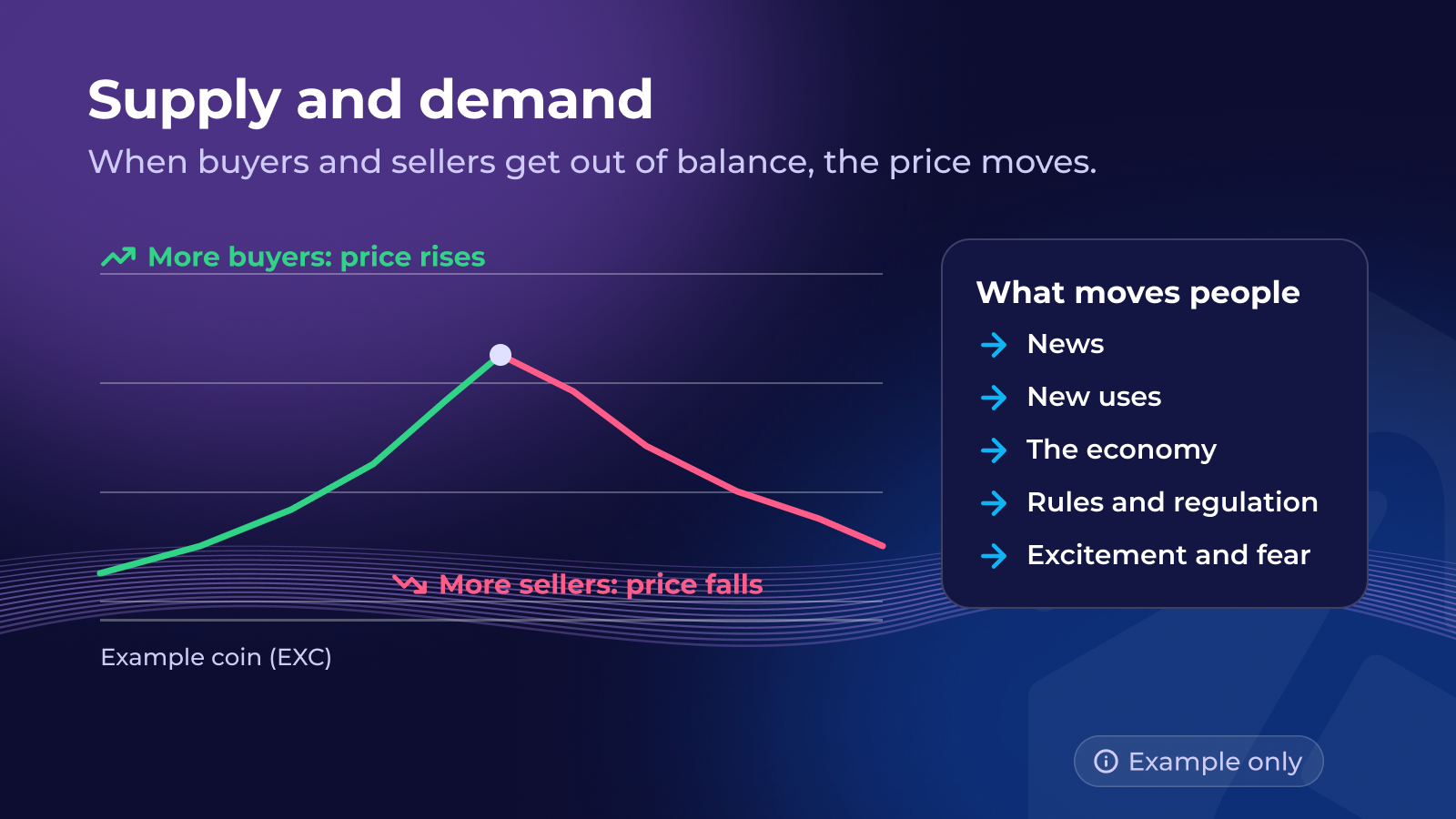
Prices move when the balance between buyers and sellers changes.
Imagine a fictional coin, Examplecoin (EXC), at $10. Suddenly many more people want to buy than sell. Buyers start offering more to get their order filled, and the price climbs until enough sellers are tempted to sell. When sellers outnumber buyers, the opposite happens: they lower their asks and the price falls.
What makes people want to buy or sell? News, new uses for the project, changes in the wider economy, rules and regulation, and plenty of plain emotion: excitement when prices rise, fear when they fall.
The chart shows a fictional path: interest rises, then fades.
Quick check
On a crypto exchange, many more people want to buy Examplecoin than sell it at today’s price. What tends to happen to the price?
Market cap and volume
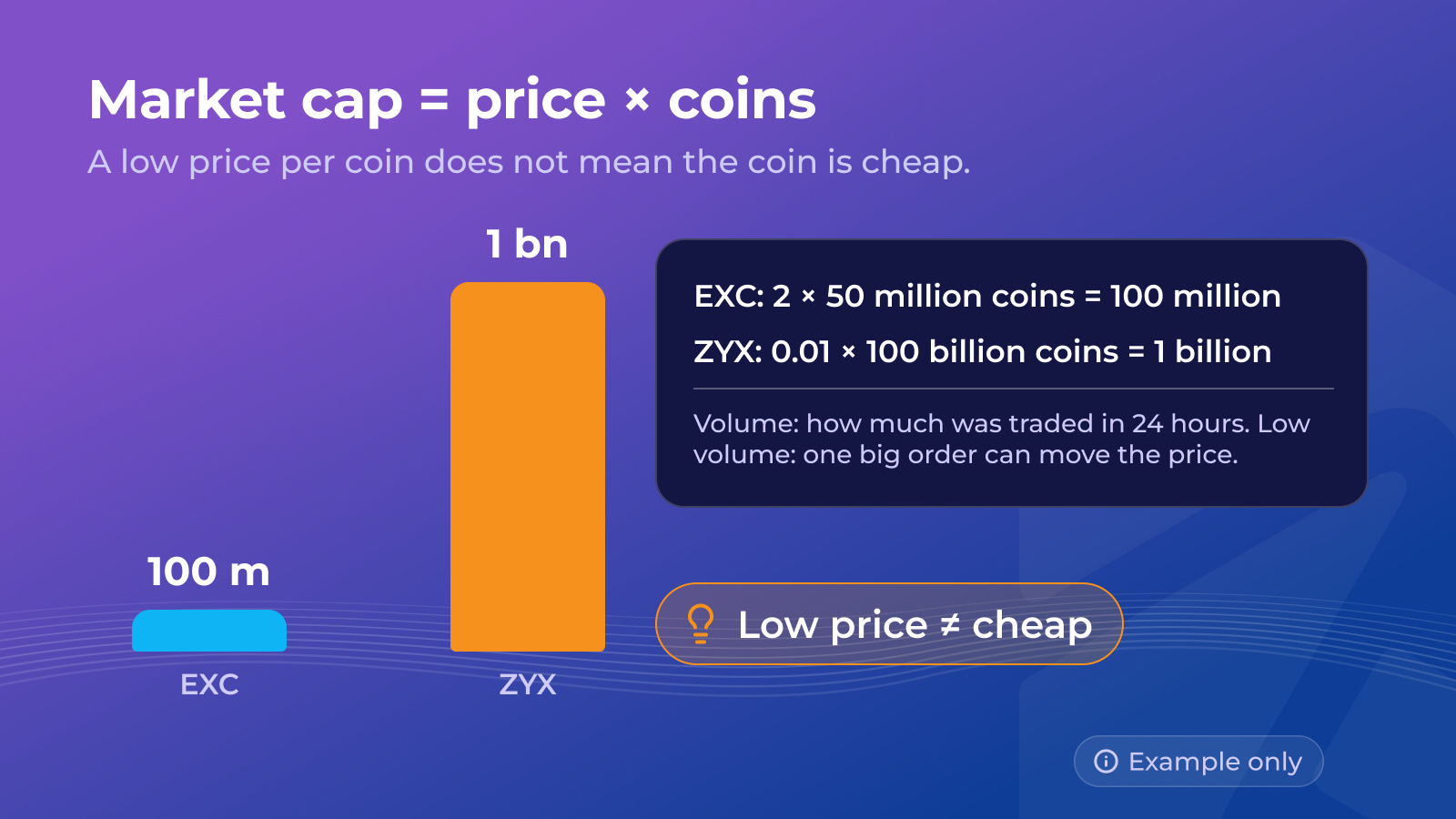
Market capitalisation (market cap) is the price of one coin × the number of coins in circulation. It tells you how big a coin’s market is.
Two fictional coins show why it matters. EXC costs $2 and has 50 million coins: its market cap is $100 million. ZYX costs just $0.01, but there are 100 billion coins: its market cap is $1 billion, ten times bigger. A low price per coin does not mean a coin is cheap.
Volume is how much of a coin was traded, usually in the last 24 hours. Low volume means fewer buyers and sellers, so one large order can move the price a lot.
Quick check
A fictional coin trades at 0.50, and 200 million coins are in circulation. What is its market cap?
Open 24/7, all over the world
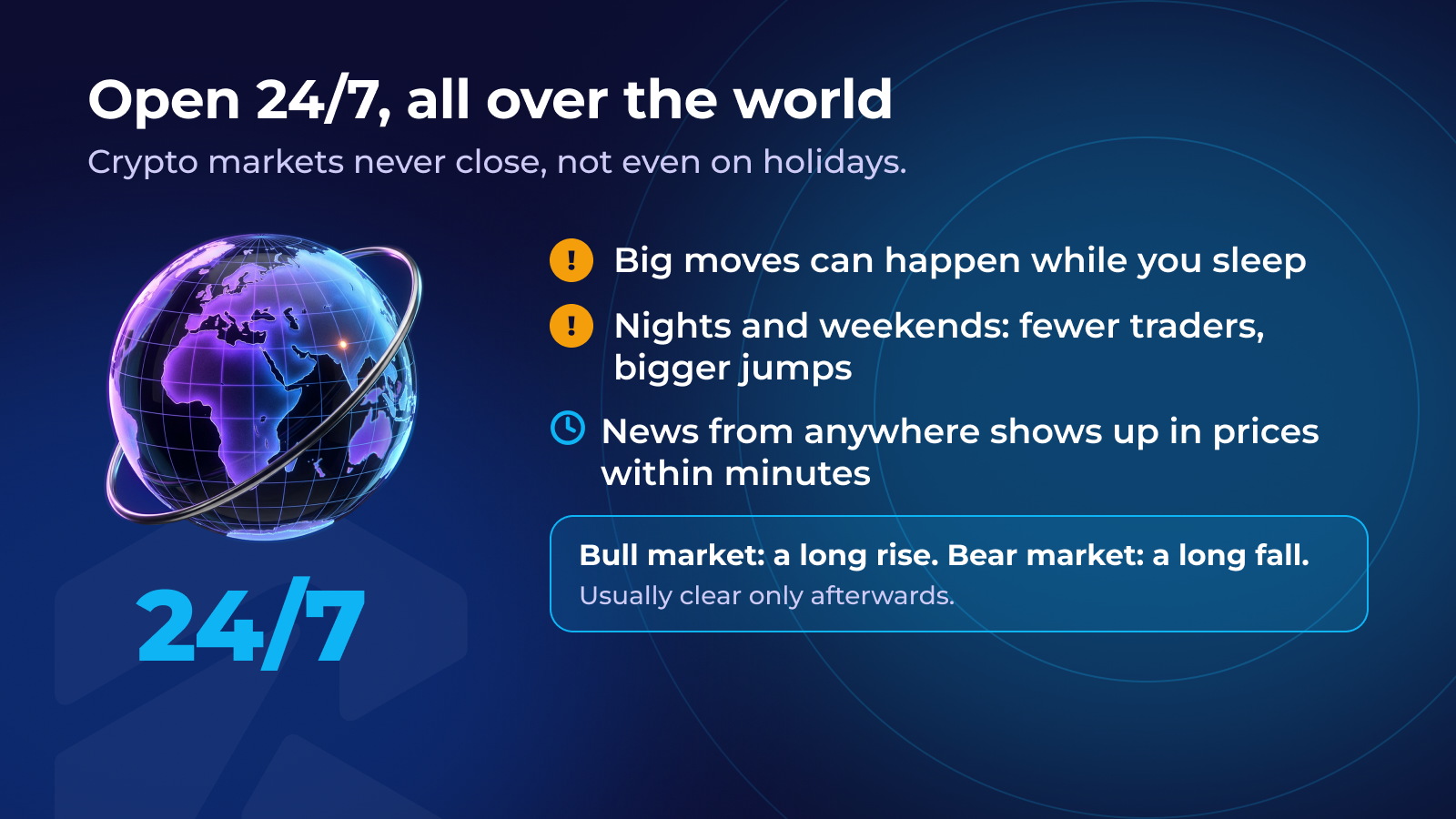
Stock exchanges open and close at set hours. Crypto markets never close: they trade 24 hours a day, 7 days a week, including holidays.
That has consequences. Big moves can happen while you sleep. At night and at weekends, fewer people trade in some markets, so prices can jump more easily. And news from anywhere in the world can show up in prices within minutes.
You will also hear two words: a bull market is a long period of rising prices, a bear market a long period of falling ones. They are usually only obvious afterwards; nobody reliably knows when one ends.
Quick check
What can move a crypto price? Select all that apply.
Select all that apply
Recap
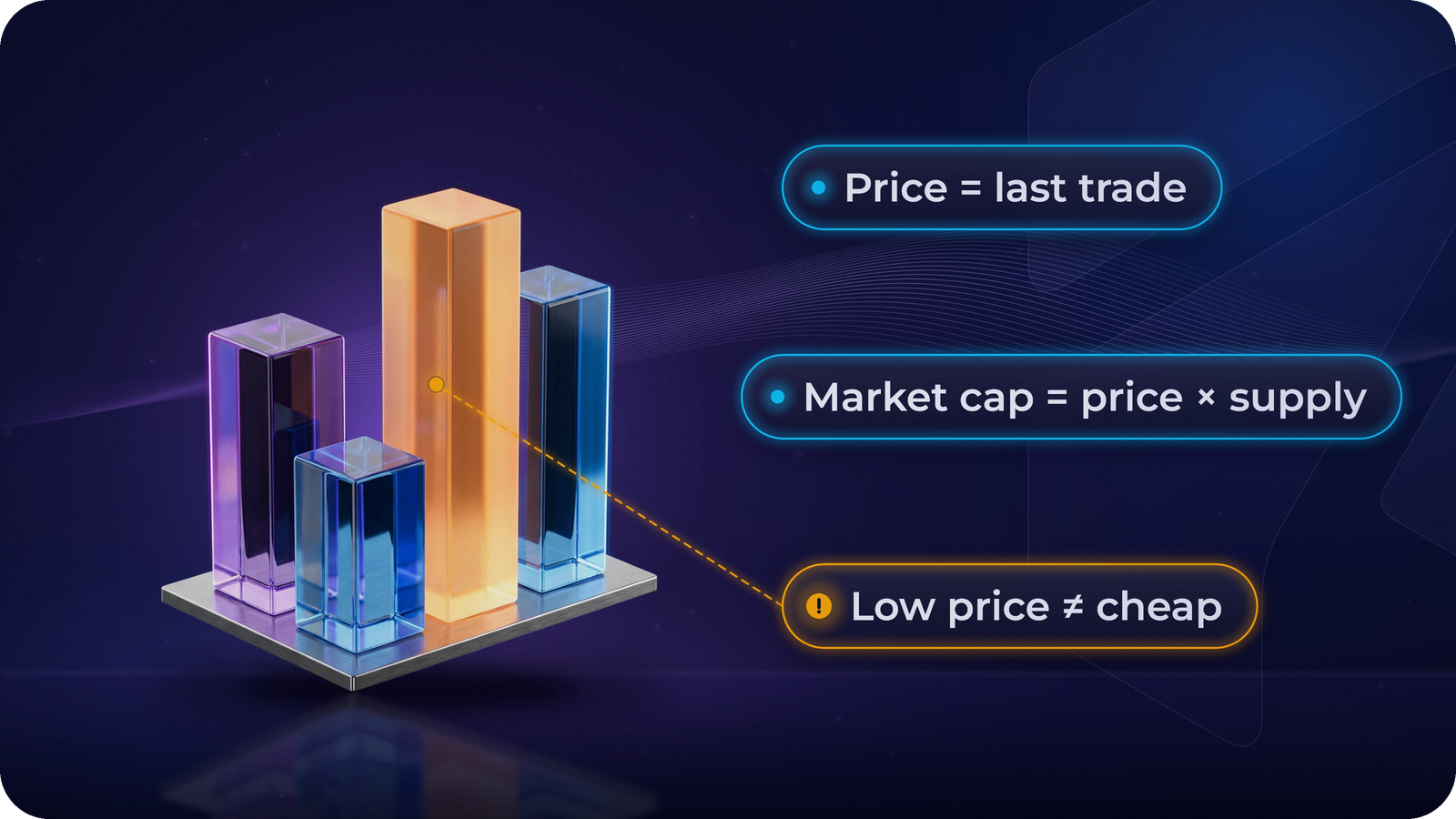
- A price is where the last buyer and seller agreed; the spread is the gap between the best bid and the best ask.
- More buyers than sellers tends to push prices up; more sellers, down.
- Market cap = price × supply. A low price per coin doesn’t mean “cheap”.
Crypto prices can rise and fall sharply, and you could lose some or all of the money you put in. Crypto is not covered by deposit protection. This lesson is education, not financial advice.
Next: Why did the price just move? What Moves Crypto Prices, and How to Read a Chart
Lesson complete!
0 / 3
That's the first chapter. Continue this course — and unlock the rest — in the Rumos app.