Is Crypto Safe? An Honest Answer
Safe from what?
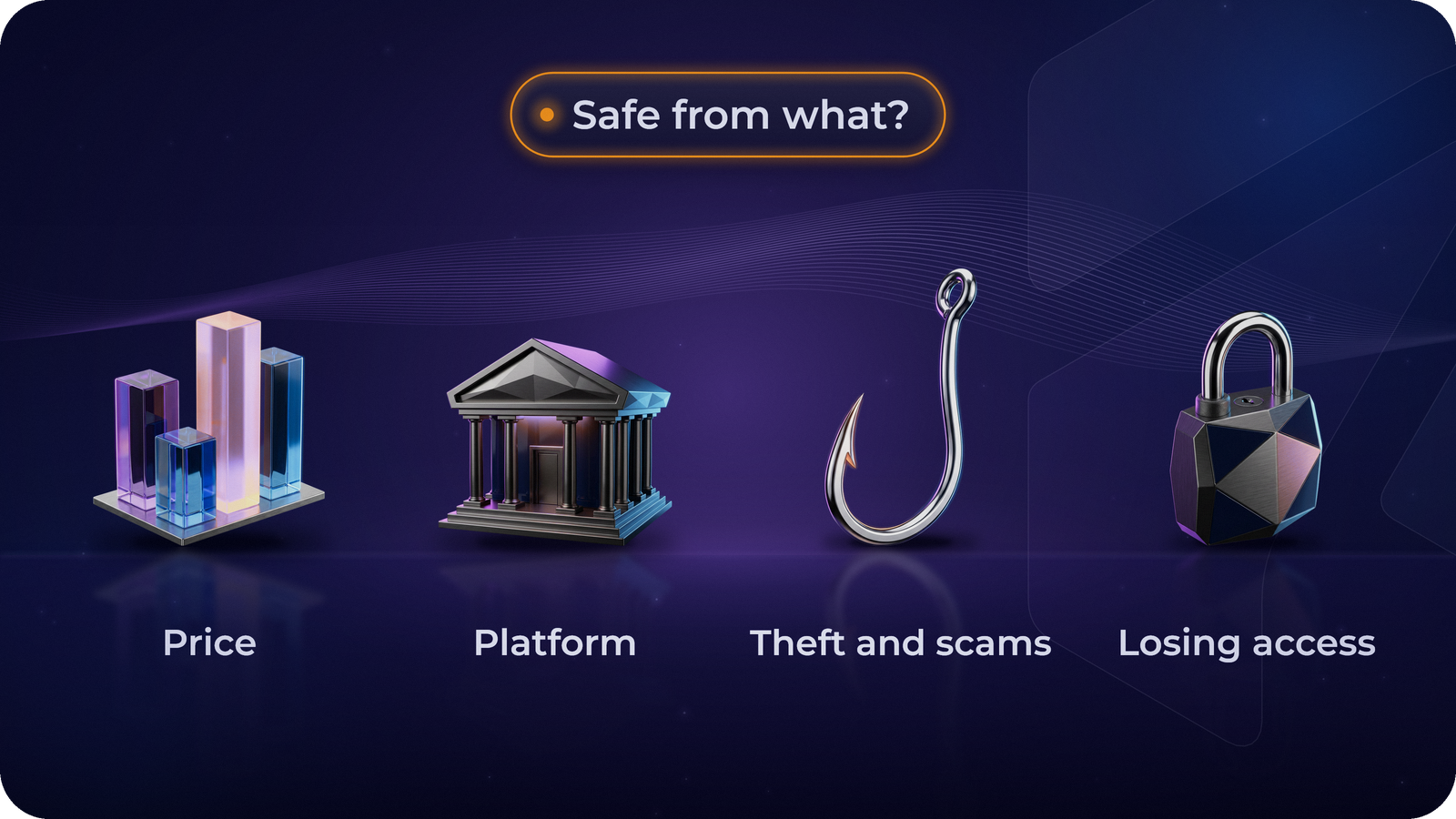
“Is crypto safe?” is one of the first questions people ask, and a fair one. The honest answer: it depends on which risk you mean.
The cryptography behind major blockchains is very hard to break. But bugs in software, bridges and apps built on top have still caused large losses, and most people who lose money with crypto lose it because the price fell, a company failed, a scammer fooled them, or they lost access.
So let’s split the question into four:
- Price: can the value fall?
- Platform: can the company holding it fail?
- Theft and scams: can someone take it?
- Access: can you lock yourself out?
1. Price risk
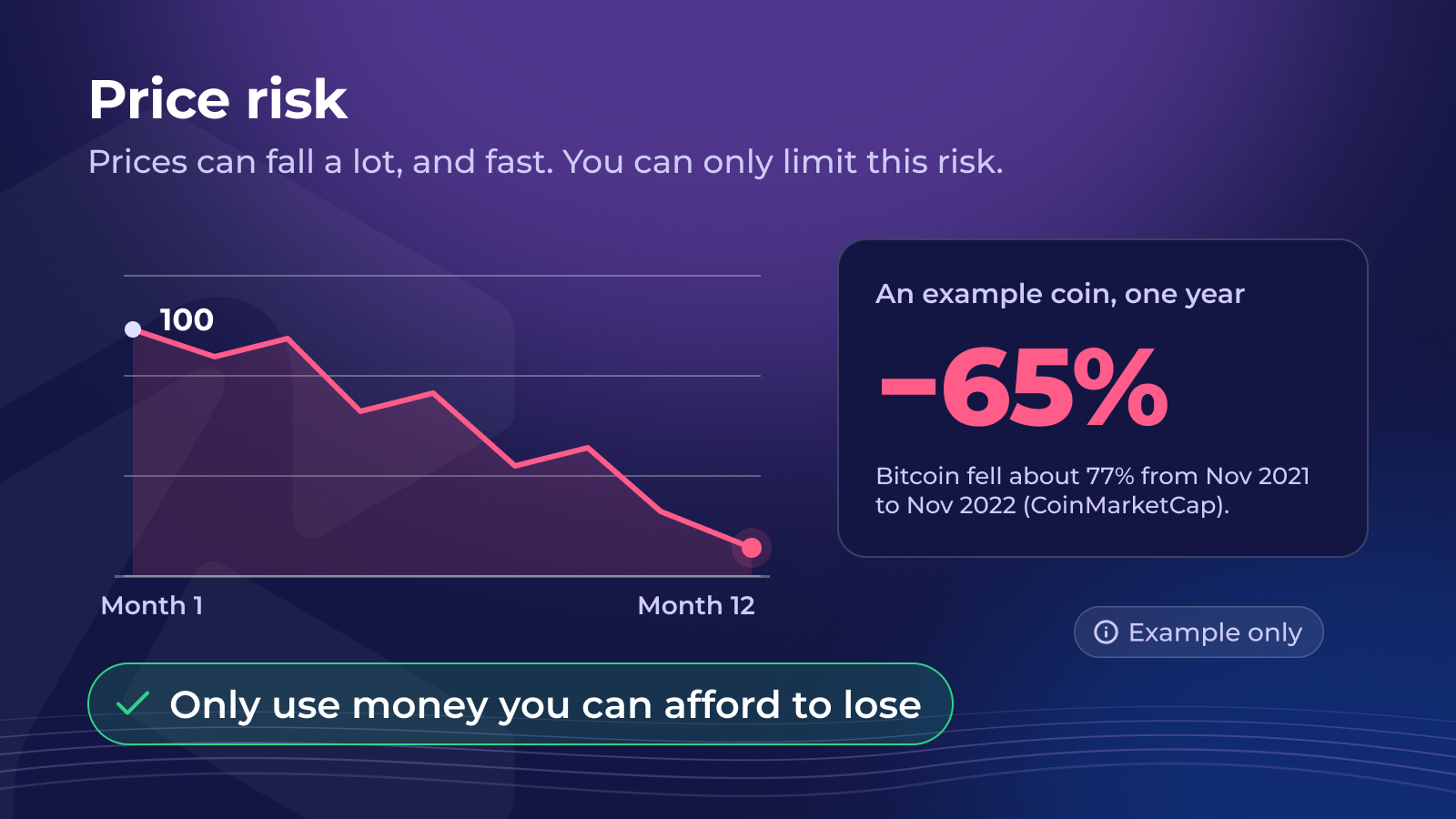
Crypto prices are volatile: they can move a lot, fast, in both directions. Bitcoin fell about 77%, from about $69,000 in November 2021 to about $15,500 in November 2022 (source: CoinMarketCap historical prices). Many smaller coins have lost almost all of their value. Past performance is not a reliable indicator of future results.
No setting or app can remove this risk. You can only limit it:
- Only use money you can afford to lose, not money for rent, bills or emergencies.
- If you decide to hold crypto at all, keep it to an amount you could see fall a lot without panicking.
- Understand what you hold and why, before you buy it.
The chart shows a fictional coin: the kind of fall that can happen in a year.
Quick check
Which habit limits how much a sharp fall in crypto prices can hurt you?
2. Platform risk
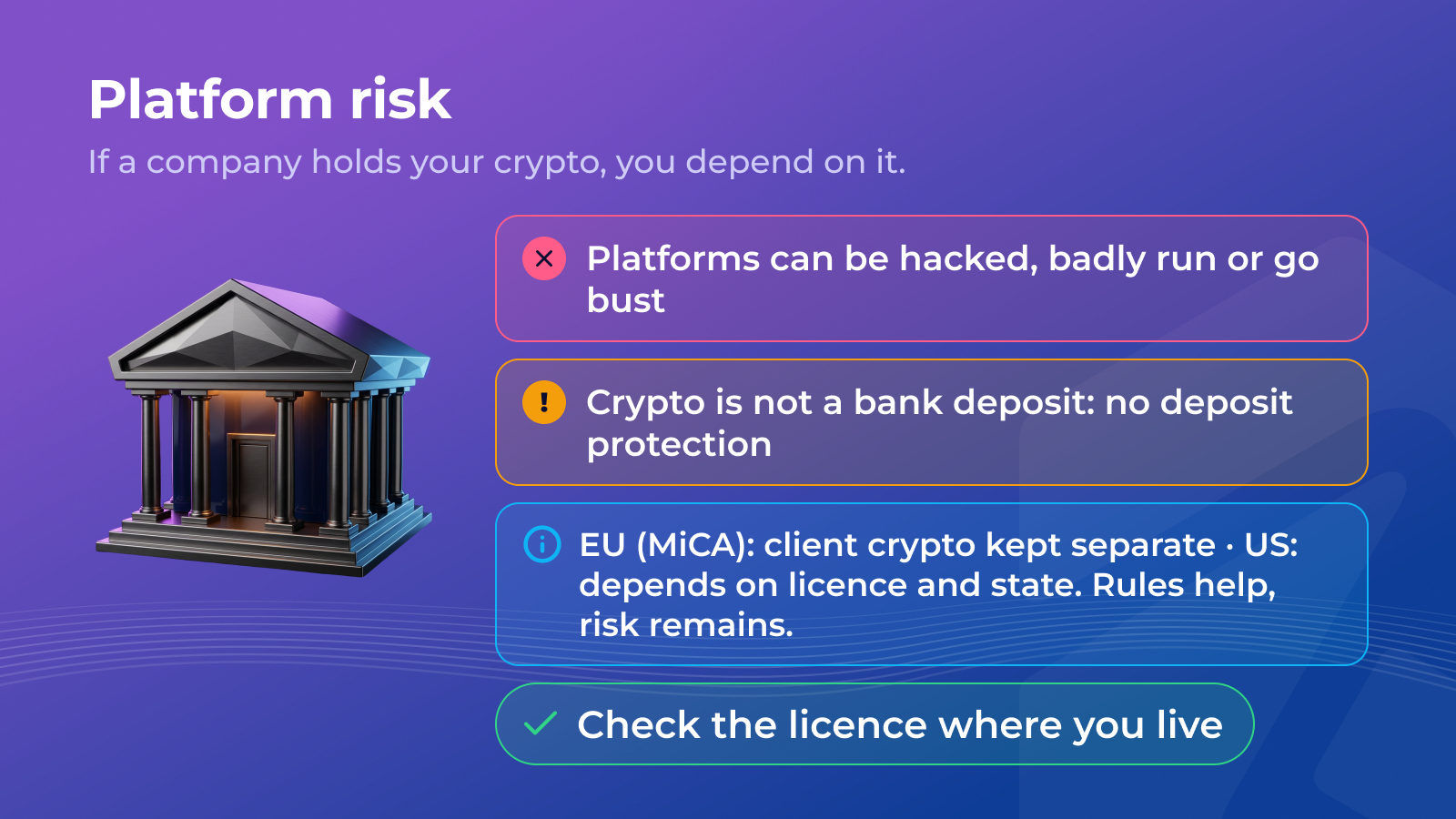
If a company holds your crypto for you, you depend on it. Platforms can be hacked, run badly, or go bust. When the FTX exchange collapsed in November 2022, customers suddenly could not withdraw.
Two facts matter here. First, crypto is not a bank deposit: it is not covered by deposit protection. Second, rules help but don’t remove risk. In the EU, licensed providers under the MiCA regulation must, for example, keep clients’ crypto separate from their own. This describes the EU rule in general, not any particular provider; in the US and other countries, the rules depend on the provider’s licence and where it operates.
What you can do: check that a provider is licensed or registered where you live, read how it holds client assets, and be wary of any service promising high fixed returns on your crypto.
Quick check
A crypto platform suddenly pauses all withdrawals. Which kind of risk is this?
3. Theft and scams, 4. Losing access
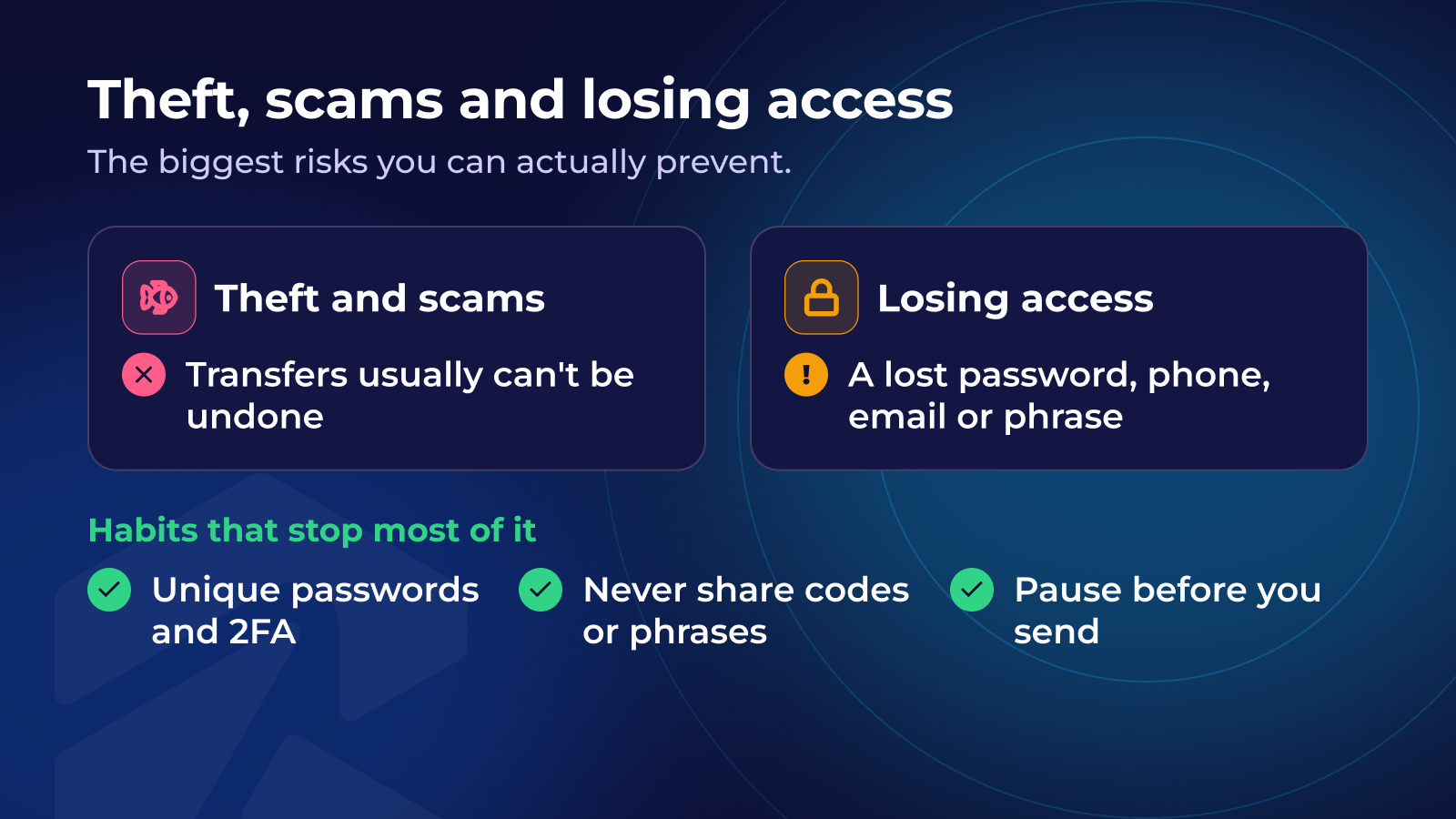
Theft and scams are the biggest preventable risk. Phishing sites, fake support agents and fake investment platforms are designed to make you hand over access or send money. Crypto transfers usually can’t be reversed, so once it’s sent, it’s usually gone.
Losing access is the quiet risk: a forgotten password, a lost phone, an email account you can no longer open, or a lost recovery phrase if you hold your own keys.
Both can be reduced a lot with habits you will learn in the next lessons: unique passwords, two-factor authentication, never sharing codes or recovery phrases, and pausing before any payment someone is pushing you to make.
Quick check
Emma worries that someone could log in to her crypto account with a leaked password. What helps most?
Quick check
“Is crypto safe?” Which answer is the most accurate?
Recap
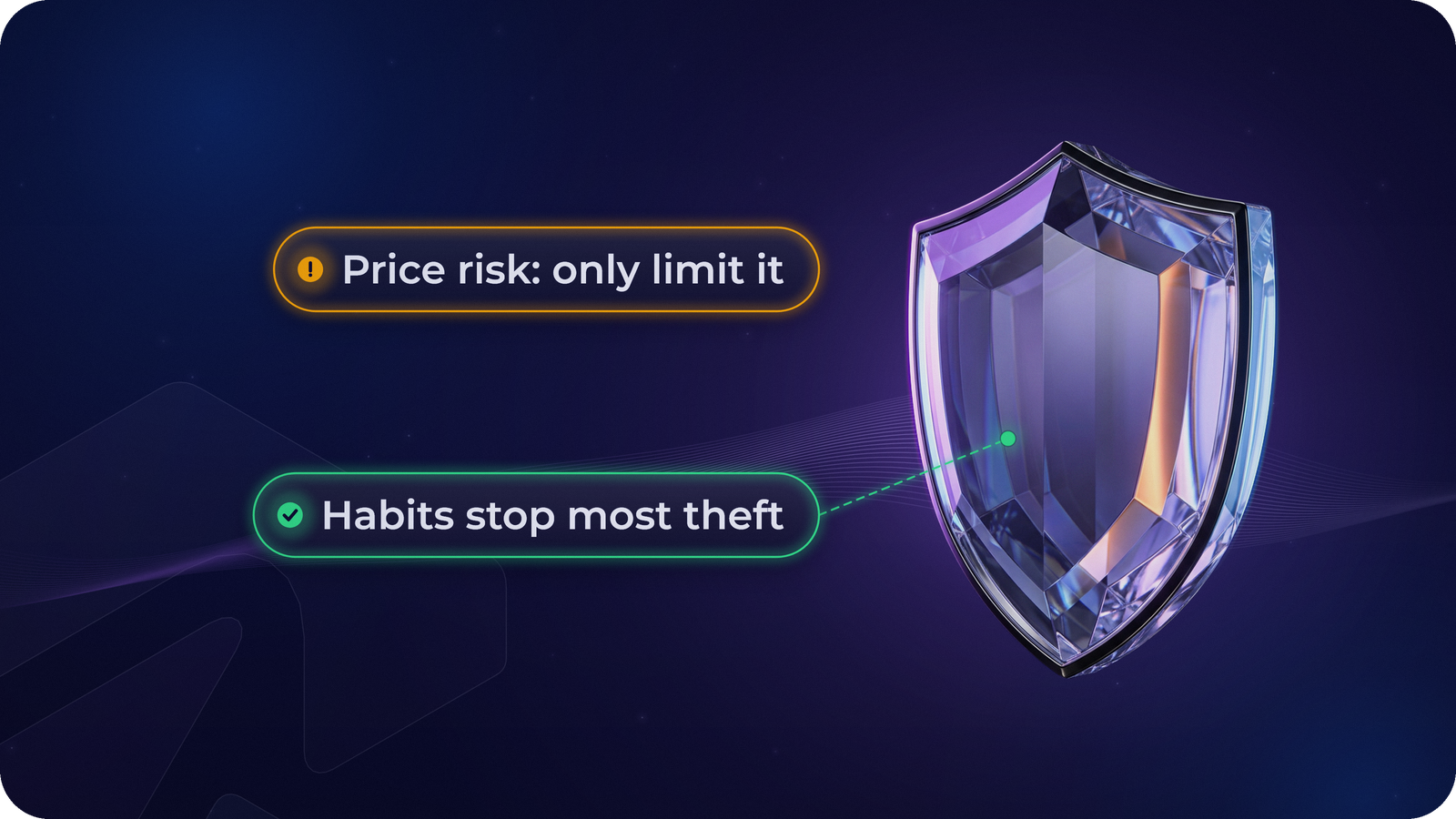
- Ask “safe from what?”: price, platform, theft and scams, or losing access.
- Price risk can only be limited: use money you can afford to lose.
- Most theft and lock-outs are prevented by habits, not by luck.
Crypto prices can rise and fall sharply, and you could lose some or all of the money you put in. Crypto is not covered by deposit protection. This lesson is education, not financial advice.
Next: Which habits stop most account takeovers? Secure Your Accounts: Passwords, 2FA and Your Phone
Lesson complete!
0 / 4
That's the first chapter. Continue this course — and unlock the rest — in the Rumos app.