What Makes a Coin “Stable”?
The coin that tries not to move
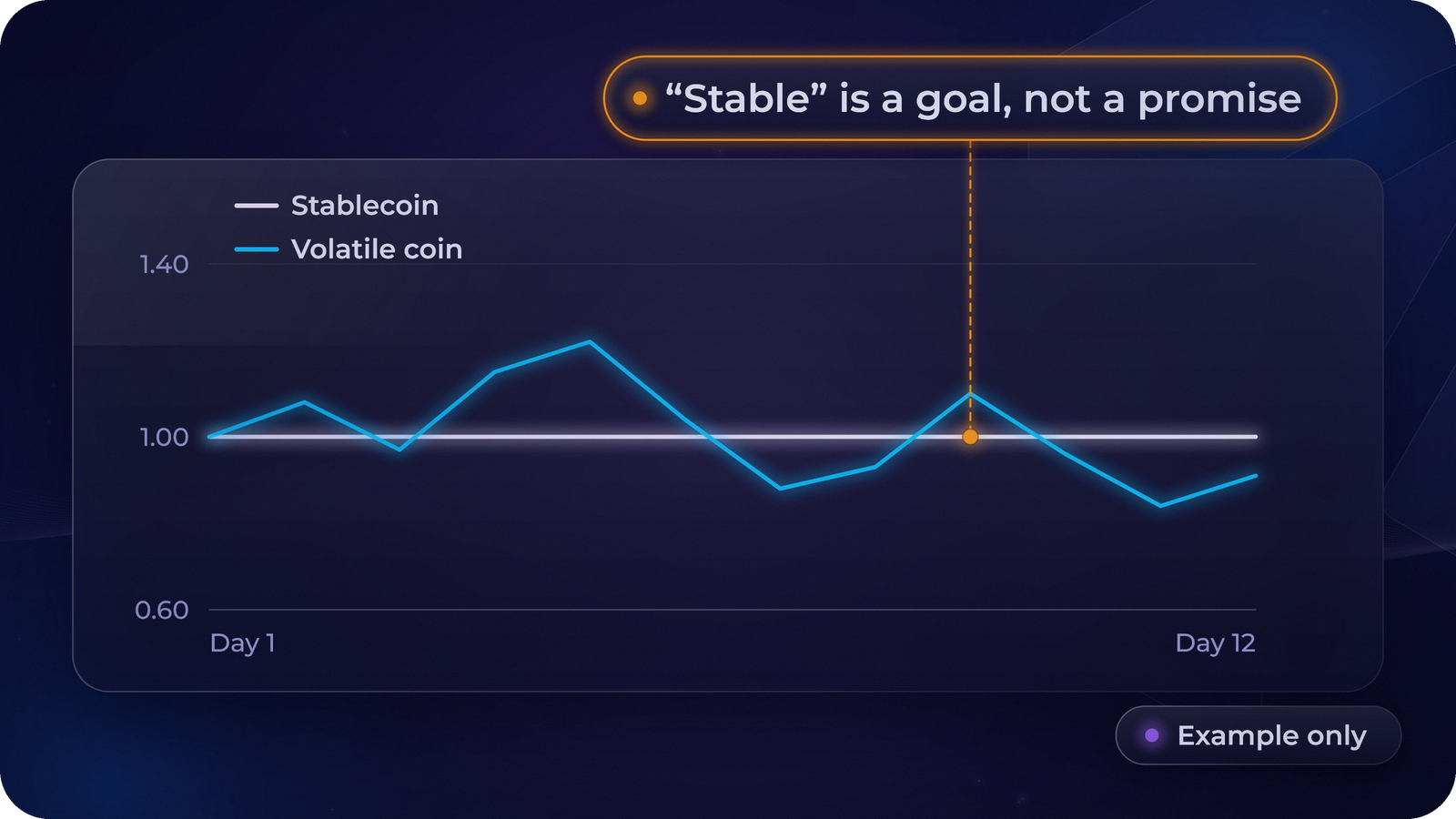
Most crypto prices move a lot, sometimes by 10% in a day. That makes them awkward for paying, pricing things or moving money between platforms.
A stablecoin tries to solve this. It's a token on a blockchain designed to keep a fixed value, usually 1 US dollar or 1 euro. That target value is called the peg.
People use stablecoins to move value between crypto platforms, as the “cash” side of crypto trades, for payments and to hold a dollar or euro value on a blockchain.
“Stable” describes the goal, not a guarantee. How well a stablecoin holds its peg depends on what stands behind it, which is what this chapter is about.
Three ways to hold a peg
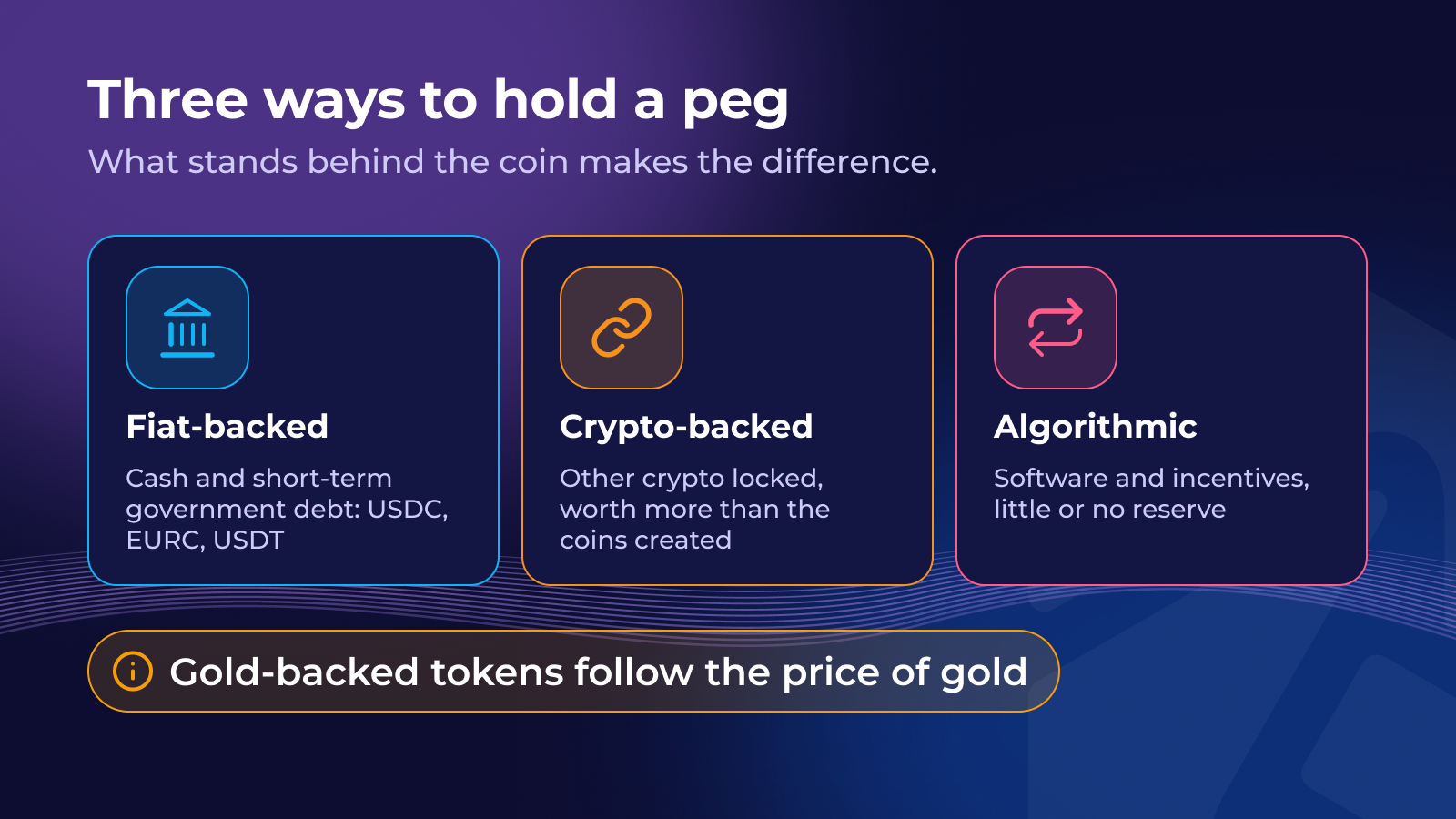
Stablecoins differ in what stands behind them:
- Fiat-backed. A company holds reserves of cash and short-term government debt and issues one token for each dollar or euro it receives. USDC, EURC and USDT work this way.
- Crypto-backed. Users lock other crypto in a smart contract, worth more than the stablecoins they create, to absorb price swings.
- Algorithmic. Software adjusts supply and relies on incentives, with little or no reserve. This is the most fragile design.
There are also tokens backed by commodities such as gold. Their value follows the commodity, so they are not stable in the same sense.
Fiat-backed: the one-for-one idea
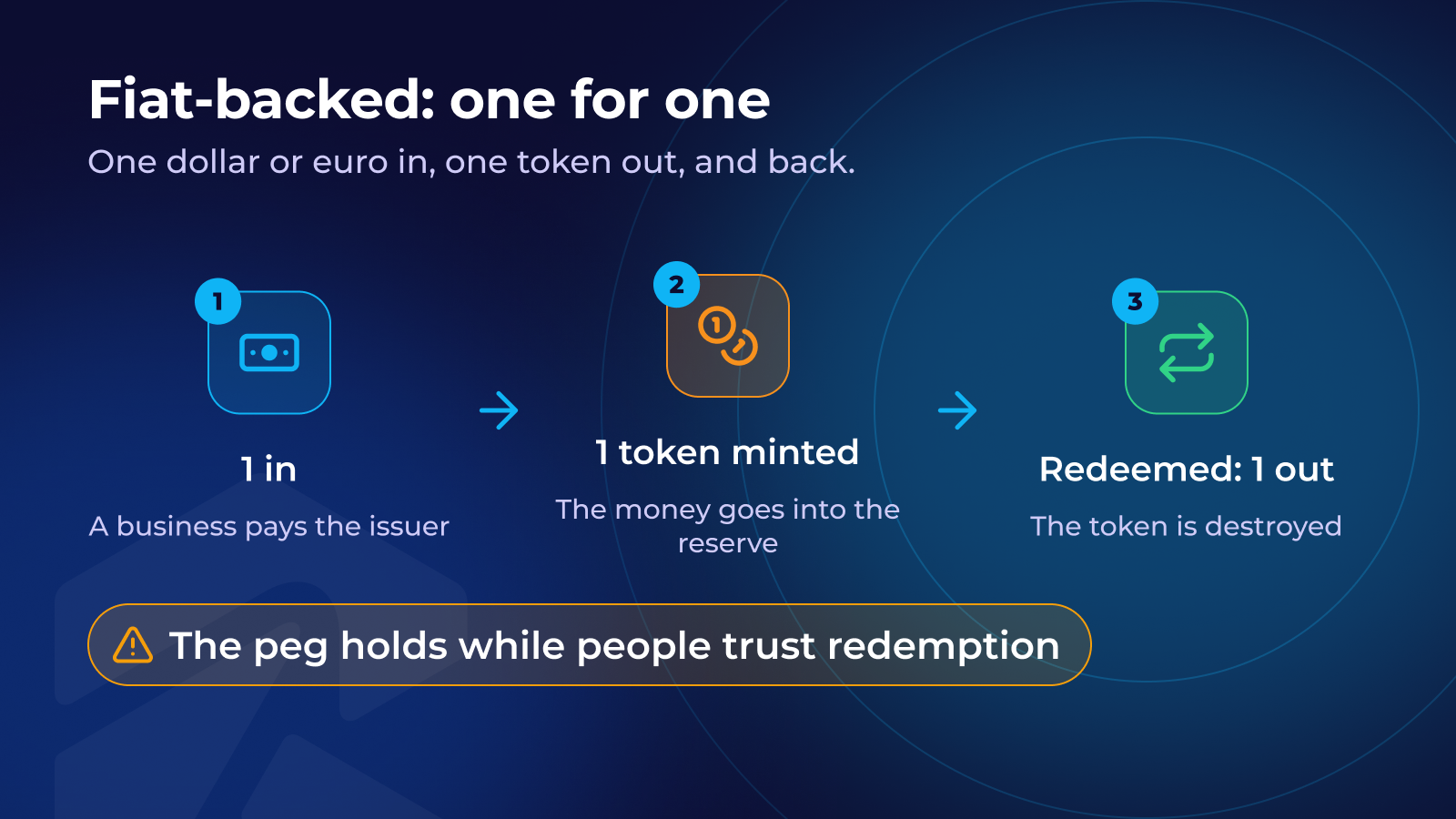
Fiat-backed stablecoins are the most widely used. The idea is simple:
- A business sends the issuer €1 and receives 1 newly created (“minted”) token.
- When a token is returned (“redeemed”), the issuer pays out €1 and destroys the token.
- The money received sits in a reserve: bank deposits and short-term government debt.
The peg holds as long as people trust that every token can be swapped back for one unit of currency. If that trust cracks, holders rush to sell, much like a bank run.
So the questions that matter are: what's in the reserve, who checks it, and who can redeem.
Quick check
A business sends €1,000 or $1,000 to the issuer of a fiat-backed stablecoin in that currency. What normally happens?
Crypto-backed and algorithmic
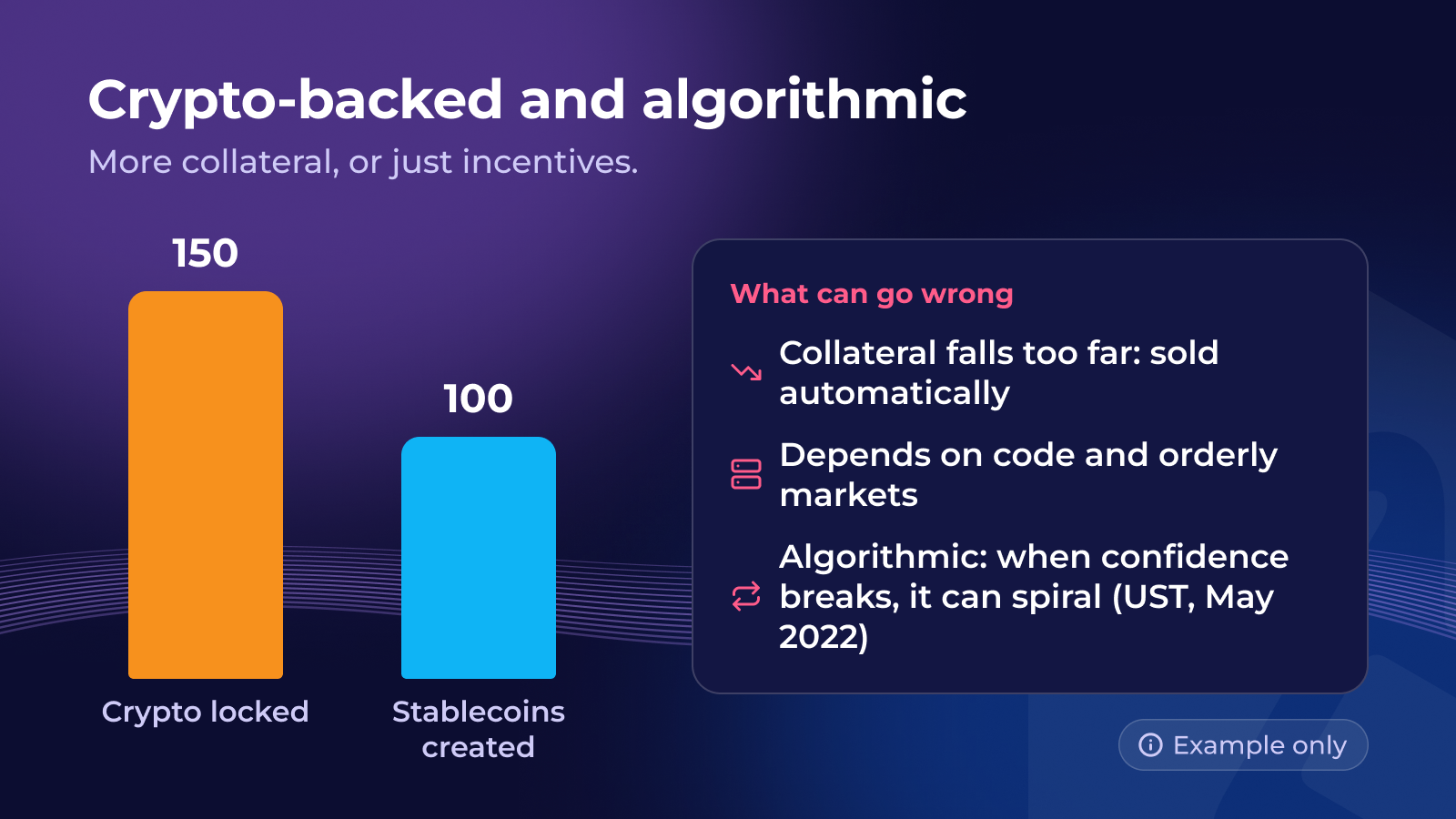
Crypto-backed stablecoins avoid banks but take on crypto's price swings. To create €100 of stablecoins, a user might have to lock €150 of other crypto. If that collateral falls too far, the smart contract sells it automatically to keep the stablecoin covered. These systems depend on code working correctly and on markets staying orderly.
Algorithmic stablecoins try to hold the peg with incentives, often using a second token. As long as people believe in it, it works. When confidence breaks, it can spiral down quickly. TerraUSD (UST) showed this in May 2022, when it collapsed along with its sister token, LUNA. You'll look at that case in chapter 4.
Quick check
Stablecoins: which statement is true?
Quick check
A new stablecoin has no reserve. It promises to hold $1 or €1 through “smart supply rules” and a sister token. Which type is it, and what's the main concern?
Recap: stable is a goal

- A stablecoin aims to hold a fixed value, its peg.
- Fiat-backed coins rely on reserves and redemption; crypto-backed on locked collateral; algorithmic on incentives.
- The more solid the backing, the better the chance of holding the peg. None of them is risk-free.
Stablecoins are not bank deposits, can lose their peg, and the issuer can freeze tokens.
Crypto prices can rise and fall sharply, and you could lose some or all of the money you put in. Crypto is not covered by deposit protection. This lesson is education, not financial advice.
Next: what reserves are made of and how to check them.
Lesson complete!
0 / 3
That's the first chapter. Continue this course — and unlock the rest — in the Rumos app.