Market NewsBeginner9 min
Crypto this week (12–18 Oct 2026): 5 questions on hardware wallets, stablecoins and inflation
Can a hardware wallet from a reseller be tampered with? What is a significant e-money token? Why did one inflation report move bitcoin? Five questions from 12–18 October 2026, from Ledger's implant findings to USDC's new EU supervision, answered with checked sources.
By Rumos · 16 days ago
In this article
- 1. Can a hardware wallet bought from a reseller be tampered with?
- 2. What is a "significant" e-money token?
- 3. Why did one inflation report move bitcoin?
- 4. Is a bank-backed euro stablecoin on the way?
- 5. Will swapping crypto for a stablecoin be taxed?
- What to take from this week
- What you can do now
- Questions readers ask
Some weeks are easiest to follow as a list of questions. Between 12 and 18 October 2026, tampered hardware wallets, an EU decision about a big stablecoin and one US inflation report gave beginners plenty to ask about. Bitcoin briefly slipped under $80,000 and ended the week 2.0% lower. Here are five questions people were asking, with answers built only on checked sources.
Key points: what happened in crypto this week?
- Ledger confirmed that hidden components in some devices sold by the reseller CryptoBilis captured recovery phrases during setup. Ledger said there was no flaw in its chip, operating system or servers.
- The EBA classified USDC as a "significant" e-money token, which brings EU-level supervision of its reserves from 12 November 2026.
- Bitcoin slipped after hotter-than-expected US inflation data on 14 October, touched $79,736 the next day and closed the week at $82,020, down 2.0% in dollars and 2.2% in euros.
- Qivalis, backed by 37 European banks, got a Dutch e-money licence but has not issued a euro stablecoin yet.
- French MPs voted 38–37 to tax swaps of crypto into stablecoins from 2027. It is not law.
1. Can a hardware wallet bought from a reseller be tampered with?
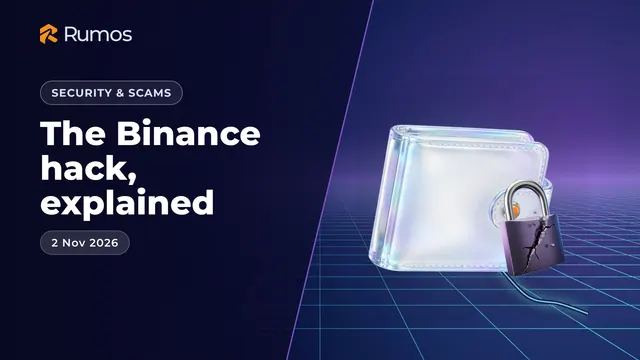
This week showed that it can happen. A hardware wallet is a small device that keeps the keys to your crypto offline. After theft reports on 9 October, the maker Ledger said on 12–13 October that covert hardware had been found inside some devices sold by CryptoBilis, a reseller in Southeast Asia. According to CoinDesk, the hidden part read the 24-word recovery phrase from the screen during setup and sent it out over the mobile network. A recovery phrase is the list of words that can restore a wallet, so whoever has it can move the crypto.
In its statement on 15 October, Ledger said "a highly organized criminal group" bought genuine devices, fitted "custom-built hidden components designed to capture the recovery phrase during setup" and put them back into distribution through resellers in South East Asia. "There was no flaw in Ledger's chip, operating system or servers," it said. Ledger asked its authorised resellers in Southeast Asia and Hong Kong to suspend sales. It found no compromised units in its own stock or in devices bought in German stores, where the retailer MediaMarkt Saturn had paused Ledger sales after a German customer reported a "spy" implant (CoinDesk).
How much was taken is not settled. Blockchain researchers estimated up to $93.2 million across more than 300 wallets (CoinDesk), but Ledger has not confirmed a total. Tether, which issues the stablecoin USDT, froze about $10 million in USDT tied to the theft.
What it means for you: Ledger's advice on 9 October was not to set up devices bought from CryptoBilis in the past 90 days and, if you had already used one, to consider moving your funds to a new device with a newly generated recovery phrase. More generally, buying from the maker or an authorised seller and checking that the packaging is intact lower this kind of risk but don't remove it, and never use a device that arrives with a recovery phrase already written down or set up. Our course on storing cryptocurrencies explains how hardware wallets work.
2. What is a "significant" e-money token?
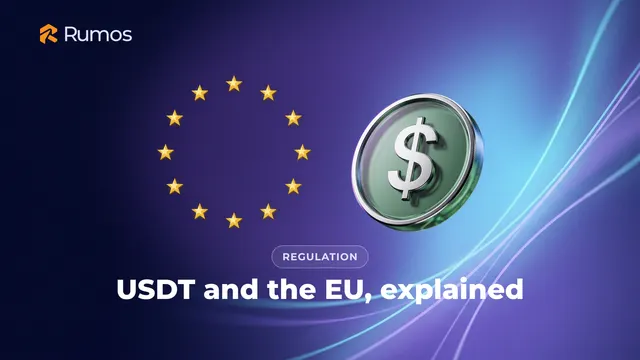
An e-money token (EMT) is MiCA's name for a stablecoin tied to a single official currency, such as the euro or the US dollar. On 14 October, the European Banking Authority (EBA) classified USDC, issued in the EU by Circle Internet Financial Europe SAS, as a "significant" EMT. The EBA said that, of the 45 e-money tokens notified in the EU, USDC is the first to be classified this way.
"Significant" is a label for tokens big enough to get an extra layer of EU-level supervision. From 12 November 2026, USDC moves to MiCA's dual supervision:
- The EBA takes over direct supervision of its own funds, reserve of assets, liquidity, and recovery and redemption plans from France's regulator, the ACPR.
- The ACPR keeps governance, major shareholdings, fit-and-proper checks on managers, outsourcing and conflicts of interest.
The EBA also signed an agreement with the New York State Department of Financial Services to cooperate on USDC's cross-border activity. In the US, USDC is issued by Circle Internet Financial, LLC.
What it means for you: "significant" is a label for size, not a warning or a seal of approval. From 12 November, an EU-level authority will supervise the token's reserves directly. That is extra oversight; it doesn't make any stablecoin risk-free, and stablecoins are not bank deposits. It is also the opposite case to ESMA's 8 October opinion, whose three-month deadline was still running: that opinion is about stablecoins that do not comply with MiCA. Our stablecoins course explains the basics.
3. Why did one inflation report move bitcoin?
On Wednesday 14 October, the US consumer price index (CPI), the main measure of how fast prices are rising, showed prices up 0.6% in September and 3.7% over a year. "Core" CPI, which leaves out food and energy, rose 0.3% on the month and 2.6% on the year, according to the US Bureau of Labor Statistics.
Bitcoin (BTC) fell below $82,000 that day. The Block reported that the selling came "after September's inflation report showed core consumer prices rising more than expected", reviving talk of another interest-rate rise by the Federal Reserve, the US central bank. Overnight, South Korea's main stock index, the Kospi, fell about 8%, CoinDesk reported, without giving a specific cause. On Thursday 15 October, as US stocks added to early losses, bitcoin fell below $80,000, in CoinDesk's words "for the first time since mid-September", to a low of $79,736 (€71,099). Within about 90 minutes it was back above $82,000.
Bitcoin closed the week at $82,020 (€73,059), down 2.0% in dollars and 2.2% in euros. Ether (ETH) fell 5.0% in dollars and 5.2% in euros, to $2,408 (€2,145). That close is exactly where the following week, 19–25 October, began.
What it means for you: one report can move bitcoin because it changes what traders expect from interest rates. Higher-than-expected inflation can mean rates stay higher for longer. The quick bounce also shows that one sharp move within a day doesn't settle the direction for the week.
4. Is a bank-backed euro stablecoin on the way?
A step closer, but not here yet. On 14 October, Qivalis, a company backed by 37 European banks across 15 countries, said De Nederlandsche Bank, the Dutch central bank, had authorised it as an electronic money institution. That makes it eligible to issue a euro e-money token under MiCA.
Before it can issue one, it still needs a MiCA white paper, the information document a token issuer must publish, and it plans issuance "within the next months". Qivalis says it "does not currently issue electronic money or provide payment services to the public".
What it means for you: it is a licensed step towards a euro stablecoin run by mainstream banks, but there is nothing to buy or use yet.
5. Will swapping crypto for a stablecoin be taxed?
In France, possibly, but it is not law. In the National Assembly's debate on the 2027 budget in mid-October, MPs adopted amendment I-3898. It would make swapping crypto into MiCA-regulated euro or dollar stablecoins a taxable sale from 1 January 2027, at France's 31.4% flat tax. The vote was 38 for, 37 against, with 25 abstentions. Public Accounts Minister David Amiel had asked for it to be withdrawn. The Assembly still had to vote on the whole revenue section, and the budget then goes to the Senate.
What it means for you: whether swapping one crypto asset for another counts as a sale for tax depends on where you live, and the rules can change. This is a French proposal only.
What to take from this week
Many of this week's answers ended with "not yet" or "not confirmed". The stolen total in the hardware-wallet case is unconfirmed, the bank-backed euro stablecoin has no token yet, the French tax is not law, and USDC's new supervision starts on 12 November. Bitcoin was back above $82,000 within about 90 minutes of falling under $80,000. Reading to the end of a story, and checking the primary source, gives a calmer picture than the first headline.
What you can do now
- Learn the basics of setting up and checking a wallet in our introduction to security.
- See how MiCA treats stablecoins and e-money tokens in our course on crypto rules in the EU.
- Learn why inflation data and interest rates move crypto prices in about the crypto market.
- New to ETFs and fund flows? Start with investment basics.
Questions readers ask
Did money leave crypto ETFs this week?
Yes. A net $228.6 million left US spot bitcoin ETFs (our sum of the daily figures; Cointelegraph, using SoSoValue data, reported about $229 million), their second losing week in a row, and about $320 million left ether ETFs, their third.
Can a company stop its shares being tokenised?
Under the SEC's innovation exemption, listed companies have 30 days to object. By a notice reported on 17 October, nine had objected to the OKXICE venue, including Broadcom, Verizon and CoreWeave.
Is a crypto exchange buying a bank in the EU?
Payward, the parent of Kraken, agreed on 14 October to buy Lithuanian-licensed Saldo Bank. The deal needs regulatory approval and is expected to close in 2027.
Crypto prices can rise and fall sharply, and you could lose some or all of the money you put in. Crypto is not covered by deposit protection. This article is for education, not financial advice.